Hidden Name on the Bridge
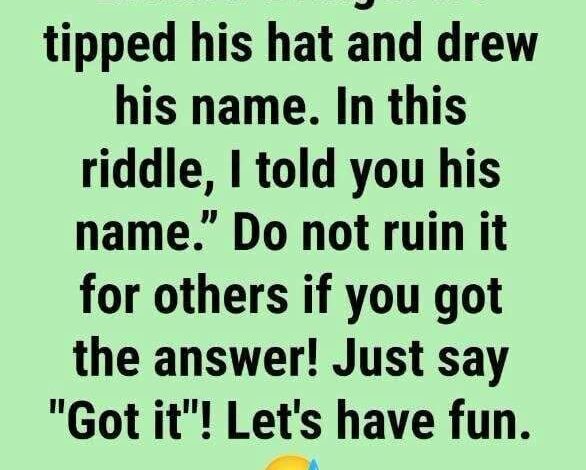
It sounds like a simple link between one action and the next. The riddle takes advantage of precisely that ordinary reading. The phrase about drawing his name may also tempt readers to picture a signature or a drawing. Either picture sends attention away from the words themselves.
Some people tell a version in which the man draws his cane. The same answer works because the two words that hide Andrew are still side by side. You can test the trick by replacing the last noun without changing those two words. Then try the reverse.
Keep the bridge, the hat and the cane, but change the verb. The concealed name disappears. That is a useful way to see which parts of the sentence do the work. The closing line tells the listener that the name was already spoken, so the solution satisfies the promise without requiring any extra character or detail.
Once you hear it, the two readings can coexist. The first is a tiny story about a stranger on a bridge. The second is a name tucked inside the way that story was told. A listener can solve it by saying the line aloud, and a reader can solve it by tracing the letters on the page.