Did You Know That If a Hummingbird Comes to Your Home, It Means Something?
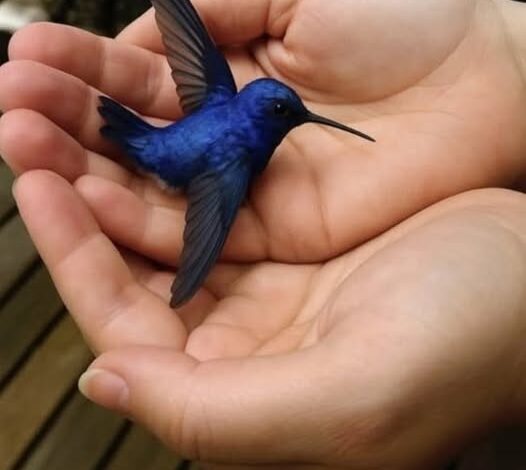
The appearance of a hummingbird is rarely a casual event. Unlike the steady, predictable flight of a robin or the distant, soaring majesty of a hawk, the hummingbird arrives as a sudden fracture in the mundane. It does not merely fly; it materializes, a vibrant glitch in the visual field that immediately seizes the observer’s focus. When this impossibly small creature—a being that seems to defy the very laws of physics with its iridescent plumage and blurred, high-speed wings—chooses to hover near your porch or dart through your garden, it acts as a profound disruptor of the numbness of routine. In that instant, the mental checklist of chores, the weight of professional anxieties, and the low-grade hum of daily stress are momentarily silenced. The hummingbird demands a level of presence that few other natural phenomena can command, forcing us to witness a living ember that burns with an intensity far greater than its physical size would suggest.
To understand the weight of this visit, one must look at the symbolic architecture that has been built around these birds across cultures and centuries. For many, the hummingbird is a signpost of renewal, appearing most poignantly after a period of prolonged difficulty or spiritual drought. There are seasons in life that feel relentlessly gray—stretches of time where the colors of joy seem to have faded into a dull, monochromatic endurance. In these periods, a hummingbird’s arrival can feel like the first stroke of a paintbrush on a blank canvas. It is a reminder that beauty has not been extinguished from the world; it has merely been waiting for the right conditions to return. Its nearness serves as a quiet blessing, a gentle nudge to the spirit suggesting that the heaviness one has been carrying may finally be starting to loosen its grip.
This sense of spiritual significance is amplified ten-fold for those walking the shadowed path of grief. In the wake of a profound loss, the world often feels thin and brittle, and the heart becomes hyper-attuned to signs of continuity. To someone in mourning, a hummingbird’s sudden, hovering presence can feel like a thin doorway between worlds. It is as if the love that was once expressed in a human voice or a familiar touch has briefly taken wing, adopting a form of pure energy and light to offer a momentary greeting. Whether interpreted as a messenger from beyond or simply a reflection of the enduring nature of love, the bird’s visit provides a rare, shimmering comfort. It suggests that while the form of a relationship may have changed, the essence remains, reminding the bereaved that they are still seen, still held, and still connected to a larger, mysterious tapestry of existence.
However, the true power of the hummingbird may lie entirely outside the realm of tradition, folklore, or religious belief. Its most potent magic is not what it says about the universe, but what it awakens within the human observer. We live in an age of profound distraction, where our attention is constantly fragmented by screens, notifications, and the relentless pace of modern productivity. We become desensitized to the miraculous because we are too busy managing the logistical. The hummingbird, however, is an antidote to this mechanical existence. Because of its speed and its fleeting nature, you cannot look at a hummingbird while thinking about your taxes or your inbox. You are forced into the immediate “now.” It triggers an instinctive, visceral state of awe—a physiological response where the breath hitches and the eyes widen.
This awakening is, at its core, an invitation into tenderness. Many of us build thick carapaces around our hearts to survive the frictions of the world. We grow cynical to protect ourselves from disappointment; we grow cold to avoid the sting of vulnerability. But it is nearly impossible to maintain a cynical posture in the presence of a creature that weighs less than a nickel yet migrates thousands of miles across open oceans. The hummingbird invites us to remember that we are still capable of feeling wonder. It coaxes a softness out of us that we may have forgotten we possessed, reminding us that there is a version of ourselves that still knows how to marvel at the small, the delicate, and the brave.
Beyond the initial shock of its beauty, the hummingbird’s visit serves as a lesson in resilience. This is a bird that must consume half its body weight in sugar every day just to survive, whose heart beats over a thousand times per minute, and who must enter a state of torpor—a mini-hibernation—every single night just to avoid starving to death in its sleep. It is a creature that lives on the razor’s edge of existence, yet it does so with a flamboyant, shimmering grace. Its life is a testament to the idea that being fragile is not the same thing as being weak. When we watch it navigate the wind and the rain to find a single drop of nectar, we are observing a masterclass in persistence. It whispers to the weary soul that if such a tiny being can endure the vastness of the world with such vibrance, perhaps we, too, can find the strength to navigate our own storms.
Ultimately, the arrival of a hummingbird at your home is less of a definitive answer to life’s questions and more of a profound invitation. It invites you to notice again—to truly see the world instead of just glancing at it. It invites you to care again, even when caring feels like a risk. Most importantly, it invites you to believe, however cautiously or skeptically, that life is still capable of surprising you. It suggests that even in the most well-trodden, predictable corners of our lives, grace can still manifest in the form of a hovering, iridescent jewel.
When the bird finally darts away, disappearing into the trees as quickly as it arrived, it leaves behind a changed atmosphere. The routine has been broken, the silence has been filled, and the heart has been slightly recalibrated. You are left standing in the wake of its departure, perhaps looking at your garden or your porch with fresh eyes, realizing that the miracle wasn’t just the bird itself, but your renewed ability to witness it. The hummingbird reminds us that while we cannot control the arrival of grace, we can certainly keep ourselves ready for it. It teaches us that the most profound meanings are often found in the most fleeting moments, and that if we are willing to be still and pay attention, the world will never stop finding ways to enchant us.