Can Breast Size Really Reveal Anything About a Woman’s Body? Here’s What Science Says
Physical appearance can sometimes lead to assumptions about a person’s personality, health, or character. Breast size is one example of a physical trait that has often been surrounded by cultural stereotypes and unsupported claims.
However, there is no reliable scientific basis for using breast size to determine someone’s personality, intelligence, confidence, character, or personal value.
Breast size is primarily a matter of normal biological variation, and people naturally have different body shapes and proportions.
What Influences Breast Size?
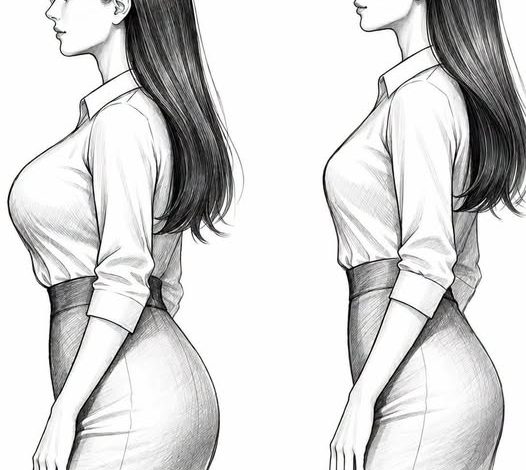
Breast development and appearance can be affected by several factors, including genetics, hormones, age, pregnancy, breastfeeding, and changes in body composition.
Breast tissue itself consists of varying amounts of glandular, connective, and fatty tissue. These proportions differ between individuals and can contribute to differences in size and shape.
Even members of the same family can have substantially different body proportions.
For that reason, there is no single breast size or body shape that can be considered a universal standard of health or attractiveness.
Can Breast Size Predict Personality?
Breast size does not provide a dependable way to determine whether someone is outgoing, shy, confident, intelligent, ambitious, kind, or any other personality characteristic.
Personality develops through a complex combination of temperament, experiences, relationships, environment, and individual circumstances.
Trying to associate a specific personality trait with a physical feature is therefore better understood as a stereotype than as a reliable method of understanding another person.
Does Breast Size Affect Sensitivity?
Physical sensitivity varies considerably from person to person.
Individual anatomy, nerve distribution, hormones, personal experiences, and other factors can influence how someone experiences physical sensations.
Consequently, breast size alone cannot reliably predict sensitivity. Differences between individuals are much more significant than generalized assumptions based on appearance.
Is Breast Size an Indicator of Health?
Breast size by itself is not a reliable measure of overall health.
Healthy people can have a wide range of body shapes, sizes, and proportions. A particular physical characteristic should not automatically be interpreted as evidence that someone is either healthy or unhealthy.
However, changes in breast health can sometimes deserve professional attention. A new lump, persistent unexplained pain, noticeable skin changes, nipple changes, or another unusual or persistent change should be discussed with an appropriate healthcare professional.
Online claims about what a particular breast size supposedly means should not be used as a substitute for professional medical advice.
Why Can Breast Size Change Over Time?
The body naturally changes throughout life.
Hormonal changes, pregnancy, breastfeeding, aging, genetics, and changes in body composition can all influence breast size and shape.
As a result, two people of the same age can have very different appearances while both fall within the normal range of human variation.
Changes in appearance are not automatically signs of a health problem.
Choosing Clothing for Comfort and Fit
Body proportions can affect how clothing fits, but there is no particular body type that is inherently better than another.
Different people may prefer different clothing designs, fabrics, cuts, and levels of support depending on their comfort and activities.
Choosing clothing based on personal preference, fit, and comfort is generally more practical than trying to match an external appearance standard.
Why Do Body Stereotypes Persist?
Ideas connecting physical characteristics with personality traits often develop through cultural influences.
Advertising, movies, television, fashion, entertainment, and social media can repeatedly associate particular appearances with concepts such as attractiveness, popularity, confidence, or social status.
When people encounter these messages repeatedly, the associations can begin to feel factual even when there is little evidence supporting them.
Beauty standards also change across cultures and generations. What is considered desirable in one society or period may be viewed differently somewhere else.
This is another reason to be cautious about treating appearance-based stereotypes as universal truths.
Why Comparing Bodies Can Be Misleading
Social media can make comparisons especially difficult.
Images can be affected by lighting, camera angles, clothing, posing, editing, and selective presentation. A carefully chosen photograph therefore may not represent how a person normally looks.
Human bodies naturally vary in size, shape, and proportion.
No single physical characteristic can determine whether someone is attractive, confident, healthy, or valuable.
Looking Beyond Physical Appearance
It is natural for people to look for patterns and explanations when trying to understand others. But a person’s character cannot be reliably determined from one aspect of their appearance.
Confidence can be influenced by experience and self-perception.
Kindness is demonstrated through behavior.
Character is reflected in decisions and actions.
Health involves numerous physical and lifestyle factors that cannot be accurately assessed simply by looking at someone’s body.
Reducing a person to a single physical characteristic overlooks the many biological, personal, social, and emotional factors that make each individual unique.
Final Thoughts
Breast size is one aspect of normal human variation, just like height, hair texture, facial features, and body proportions.
It does not provide a reliable indication of personality, intelligence, confidence, character, or overall health.
A more balanced approach to body diversity is to recognize that differences in appearance are normal and do not need to be assigned a deeper meaning.
Rather than trying to determine what one physical feature supposedly reveals about someone, it is more meaningful to consider the individual as a whole. No single part of a person’s appearance can tell their complete story.