My Family Said I Vanished After I Stopped Sending 1200 a Month
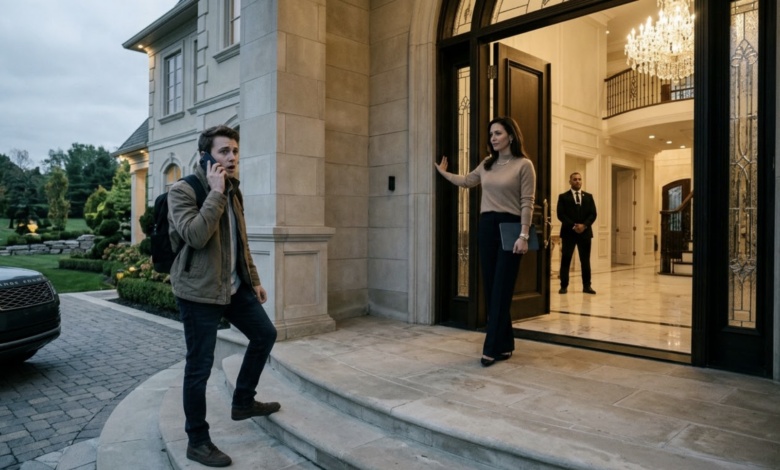
For four years, my parents told everyone I had “vanished” simply because I stopped sending money home. Then they finally sent my brother to track me down. He knocked on my door, glanced past me, and suddenly went pale. He backed down the porch steps with his phone pressed to his ear before whispering, “Mom, you need to see this—she never told us…”
Rain was streaming from the edge of my porch roof when my brother dropped his truck keys. He didn’t even reach down to grab them. He just stood there staring into my kitchen, the color draining from his face as his eyes traveled from the sage-green cabinets to the old wooden doorframe beside the mudroom. I hadn’t seen Brent in four years, and he had clearly arrived carrying a speech from our mother. But whatever he had planned to say vanished the second he recognized what was behind me.
My name is Tanya Engles. I’m thirty-three years old, and for most of my adult life, I believed it was my responsibility to hold my family together. When my grandfather died, he left our family’s forty-acre farm in western Iowa to my father. Grandpa had worked that land his entire life. He taught me how to tell whether soil was healthy, how to care for a field, and why the old white farmhouse meant more than whatever price someone might offer for it.
My father viewed the property differently.
He borrowed $310,000 against it to start a seed dealership, hoping to build a successful business of his own. Two years later, the dealership failed, but the mortgage was still there. I was twenty-three, making $41,000 a year and living in a cramped apartment in Ames when Dad called me one Sunday afternoon.
“We need twelve hundred dollars a month,” he said. “Just until things get better.”
“Dad, that’s almost half of what I bring home.”
“It’s your grandfather’s farm, Tanya. That’s what family does.”
So I said yes.
For six years, $1,200 came out of my checking account on the first day of every month. I drove an old Ford Ranger, gave up vacations, and worked weekends just to stay afloat. Every time I thought about stopping, I pictured Grandpa’s kitchen and the wooden doorframe where he had marked our heights in pencil when Brent and I were kids.
No one ever thanked me.
At Christmas, Mom praised my younger brother for staying close to the family. Dad told relatives how hard he and Mom were working to save the farm. I sat at the same table knowing exactly whose money was helping keep it going, but I never corrected him.
I convinced myself that staying quiet was another form of love.
Then one Easter Sunday, while finishing Mom’s crossword puzzle, I noticed a small legal notice in the county newspaper.
It listed my parents’ names, Grandpa’s forty acres, and a scheduled foreclosure sale at the Shelby County Courthouse.
I read the notice three times.
I had sent my payment that month.
And the month before.
And every month for six years.
That Monday, I drove to the farmhouse and placed the folded newspaper in front of Dad.
“How far behind are we?”
He barely glanced at it.
“We’re taking care of it.”
“Then let me pay the bank directly. I’ll go with you tomorrow.”
His expression hardened.
“This is my farm. You don’t get to tell me how to run it.”
Mom appeared in the doorway, looked at the newspaper, and said, “Why are you making things more difficult for your father?”
I tried to explain that I wasn’t refusing to help.
I simply wanted to know where the money I had been sending was going.
Dad stood.
“Then keep your money, Tanya. And get out.”
I left without fighting him.
Two months later, I stood outside the courthouse and watched the farm become the bank’s property.
Neither of my parents showed up.
That summer, Dad sent me a single message.
“You did this.”
Brent followed with:
“Hope you’re happy.”
Then came four years of silence.
Except it wasn’t really silence.
Mom told relatives I had disappeared.
She posted my graduation photo on Facebook and wrote about leaving an empty place for me at Christmas.
People offered her sympathy while Dad explained that he had lost everything because his daughter had stopped helping.
My phone number never changed.
Not once.
Still, nobody ever called to ask what had really happened.
I kept working.
I built my agricultural consulting company, spent countless mornings walking through fields, and slowly created a life I could finally afford.
Eventually, a public television station contacted me about filming a segment on my soil conservation work.
I agreed, knowing the interview would include both my name and where I lived.
The morning after it aired, my cousin sent me a message.
“Your mom saw you on television. She’s calling everyone.”
Everyone except me…
PART 2: I didn’t know Brent was coming until I saw his truck pull into my driveway. At first, I thought it was a delivery driver. I was standing at the kitchen counter, cutting apples and listening to the rain tapping against the windows. My television was still on, playing the weather report at low volume. Then I saw him through the glass. Brent. My younger brother, who hadn’t spoken to me in four years, was standing on my porch with his hands shoved into the pockets of his jacket. He looked older than I remembered. His hair was shorter, his shoulders heavier, and the confidence he used to carry everywhere seemed to have disappeared. I didn’t rush to open the door. I wiped my hands on a towel, walked across the kitchen, and unlocked it. “Hey, Tanya.” His voice sounded uncomfortable. “Hi, Brent.” He glanced at me, then past my shoulder. “Can I come in?” I stepped aside…
He entered slowly, wiping his boots on the mat. He looked around my kitchen as if he were trying to recognize a place he had never seen before. His eyes moved across the sage-green cabinets, the wooden table near the window, the framed photographs on the wall, and the old wooden doorframe beside the mudroom.
Then he stopped.
There were pencil marks on that doorframe.
Small lines.
Dates.
Names.
Brent walked closer.
“What’s that?”
I didn’t answer immediately.
He bent his head, looking at the marks.
“Is this…?”
“Grandpa’s doorframe,” I said quietly.
His face changed.
He remembered.
When we were kids, Grandpa used to measure our height there every summer. He’d make us stand straight, take his pencil from his shirt pocket, and mark the wood.
“Don’t slouch,” he would tell Brent.
“Grandpa, I’m not slouching.”
“You are. You’re trying to look taller.”
Then he’d laugh and put another mark on the doorframe.
The last mark Brent had was from the summer before Grandpa died.
Brent touched it with one finger.
“Why do you have this?”
I folded my arms.
“Because I wanted something that reminded me of him.”
He stared at me for a moment, then looked toward the kitchen table.
“Mom said you disappeared.”
I almost laughed.
“Did she?”
“She said you stopped answering everyone. That you moved somewhere and didn’t tell anybody. That she didn’t know where you were living.”
I walked back toward the kitchen.
“Did you believe her?”
He didn’t answer.
That was answer enough.
I pulled out a chair and sat down.
“Would you like coffee?”
“No.”
“Tea?”
“No, Tanya.”
He sounded impatient now, as if he had rehearsed the conversation in his truck and I was making him lose his place.
“Mom wants you to come home.”
“Home?”
“The farm.”
I stared at him.
“The farm was sold four years ago.”
“I know.”
“Then what exactly do you mean by home?”
He rubbed his forehead.
“She wants to see you. Dad’s been having a hard time. Things haven’t been good.”
I leaned back.
“Things weren’t good four years ago either.”
Brent looked down.
“She said you’re doing well now.”
“Apparently, she saw me on television.”
“Yeah.”
“That’s interesting.”
He looked at me, waiting.
I didn’t give him anything.
Finally, he said, “Mom thinks you should help.”
I closed my eyes for a moment.
There it was.
Not I miss you.
Not I was wrong.
Not even I should have called.
Just another request wrapped inside a family emergency.
“Help with what?”
Brent hesitated.
“Dad has some debts.”
“How much?”
“I don’t know exactly.”
“Then why are you here?”
He sighed.
“Because Mom said you could probably afford to help now. She said you have a business, a house, and all that agricultural work. She thinks you might be able to help Dad get back on his feet.”
“Did she tell you how the farm was lost?”
He looked away.
“She said you stopped sending money.”
“Did she tell you I was sending twelve hundred dollars every month for six years?”
Brent’s mouth opened slightly.
Then closed.
“She said you were helping.”
“Helping?” I repeated. “Brent, I was paying a mortgage I wasn’t even allowed to see. I asked Dad to let me pay the bank directly. He told me to get out of his house.”
“I know there was an argument.”
“An argument?”
I got up, walked to a drawer, and took out a folder.
Inside were bank statements, copies of the mortgage notices, and the newspaper clipping announcing the foreclosure.
I placed them on the table.
“Look.”
He didn’t move.
“Brent, you came here to ask me for money. At least look at what happened before you ask.”
He slowly pulled out the chair and sat down.
The first statement showed my monthly transfer.
$1,200.
The second showed another.
The third.
And the fourth.
Six years of payments, arranged chronologically.
Brent flipped through them, his expression becoming more serious with every page.
Then he reached the foreclosure notice.
He read it twice.
“Tanya…”
“Keep going.”
He looked at the next page. It was a copy of a letter I had sent to Dad asking for the mortgage account information so I could make payments directly.
Then came Dad’s handwritten reply.
This is my farm. You don’t get to tell me how to run it.
Brent stared at the handwriting.
“I never saw this.”
“Of course you didn’t.”
“Mom said you got mad because Dad wouldn’t let you control the farm.”
I let out a breath.
“That is what she told you?”
He nodded slowly.
I looked out the window at the rain.
“Your parents didn’t lose that farm because I stopped sending money. They lost it because they didn’t use the money I was sending to save it.”
Brent rubbed his face.
For a long time, neither of us spoke.
Then his phone vibrated.
He looked at the screen.
Mom Calling.
He declined it.
A few seconds later, it rang again.
He declined it a second time.
“She knows you’re here,” I said.
“Probably.”
“She told you what to say?”
Brent looked uncomfortable.
“She told me to bring you home.”
“Did she tell you to ask for money?”
I stood up and walked toward the sink.
“Brent, I don’t hate you.”
He looked at me.
“But I can’t keep pretending that everything that happened was some misunderstanding. I spent six years helping Dad. When the farm was lost, nobody asked what happened to the money. Nobody asked what I tried to do. You didn’t call me. You didn’t send a message. You didn’t even ask if I was okay.”
His eyes became wet, but he tried to hide it.
“I thought you didn’t want anything to do with us.”
“I never changed my phone number.”
He looked down at the papers.
“No, you don’t. You know now. That’s different.”
He picked up his keys from the table, then put them down again.
“Mom’s been telling people you’re selfish.”
I smiled sadly.
“She can tell them whatever she wants.”
“She said you got rich and forgot your family.”
“Brent, I didn’t get rich. I worked. I built something. I went to bed exhausted for years. I skipped things I wanted. I started my company with a used laptop and a truck that barely ran. I did it because I needed to stop living like every emergency in that family was my responsibility.”
He looked toward the back door.
That was when he noticed the framed photograph on the shelf beside it.
Grandpa’s farm.
The white farmhouse.
The old barn.
The tree beside the driveway.
I had taken the picture myself when I was seventeen.
Brent picked it up.
“Do you still miss it?”
I looked at the photograph.
“Every day.”
He put it down carefully.
“Mom said you don’t care about the farm anymore.”
I shook my head.
“That’s the part she never understood. I cared so much that I destroyed my own life trying to keep it alive. But caring about something doesn’t mean you can let people keep hurting you in its name.”
Brent’s phone vibrated again.
This time, a message appeared on the screen.
He glanced at it, and his face went pale.
“What is it?” I asked.
He read it again, then slowly stood.
His keys slipped from his fingers and hit the floor.
I looked at him.
“Brent?”
He backed toward the porch.
“What’s wrong?”
He opened the door, stepped outside into the rain, and pulled his phone to his ear.
“Mom…”
His voice was shaking.
“Mom, you need to see this—she never told us…”
I stood in the doorway, watching him.
He turned toward me, looking as if he had just discovered something he wasn’t supposed to know.
And then he said the words that made my stomach tighten.
“Mom, I think Tanya has Grandpa’s original documents.”
I stopped breathing.
Because I did.
And there was something in those documents that my father had spent four years hoping nobody would ever find.
“Grandpa’s original documents?”
I heard Brent say the words again through the screen door.
He was standing in the rain, his back turned toward me, his voice low and unsteady.
“Mom, I don’t know. I’m looking at something. Just let me explain.”
I stepped onto the porch.
“Brent, what are you talking about?”
He covered the phone with his hand.
“Just a minute.”
Then he listened.
Whatever our mother was saying, it was making him increasingly uncomfortable. He kept looking at my house, then at the old wooden doorframe, then at me.
Finally, he said, “No, Mom. You said Grandpa had no other paperwork. You said everything was settled before he died.”
He stopped talking.
I could hear my mother’s voice through the phone, loud enough to recognize but not loud enough to understand every word.
Brent closed his eyes.
“Okay. I’ll be home soon.”
He ended the call.
“What’s going on?” I asked……………………CONTINUED ON NEXT PAGE