My Mother In Law Kicked Us Out After We Spent 38000 So We Took The Kitchen With Us
She stood at the foot of the stairs with her hand on the banister and her mouth open, and for a long moment nobody said anything.
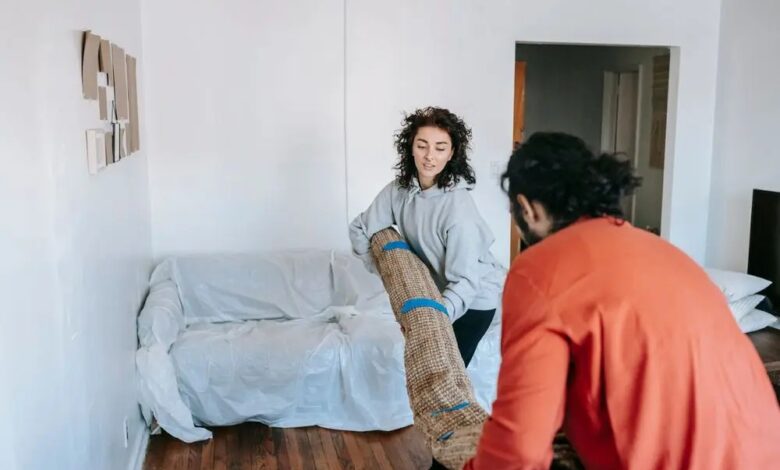
Nate had the bottom of the cabinet. I had the top. The upper we were carrying was the one that used to hang over the coffee maker, the one with the spice rack inside the door that Nate built from scrap poplar the first winter we lived up there. It weighed about forty pounds. My arms were shaking, and not only from the weight.
Darlene looked at her son, then at me, then at the bare wall at the top of the stairs.
The stair window up there faces east. At one o’clock in April the light comes in long and yellow across the landing and straight through the open kitchen door. For six years that light had landed on white cabinets, a row of mason jars, and a calendar from the feed mill.
Now it fell on a wall with nothing on it. You could see the faint outline where each cabinet had hung, paler than the paint around it, plus a few small holes where the screws had been.
“What are you doing?” Darlene said.
Her voice was very quiet.
But to explain how we got to that staircase, I have to go back six years.
My name is Kelsey Weaver. I’m thirty-one. My husband is Nate Weaver. He’s thirty-three. He drives a bulk feed truck for the Juniata Valley Feed Mill. He hauls ground corn and soybean meal to dairy farms and hog barns all over Juniata and Perry and Mifflin counties. He’s up at four-thirty every morning and home by four. He can back a forty-foot trailer up a muddy farm lane in the dark without hitting a single fencepost.
He doesn’t argue.
He fixes things.
We met at Juniata High School. He was a senior. I was a sophomore. He sat behind me in study hall and spent three weeks working up the nerve to ask if he could borrow a pencil, which he did not need, because he had four of them in his shirt pocket.
I gave him one anyway.
He still has it. It’s in his tackle box.
We got married when I was twenty-two. At the Lutheran church in Richfield. In June. Under a tent in my parents’ side yard afterward, with a pig roast and a bluegrass band from Thompsontown and my Uncle Dale doing the chicken dance at eleven o’clock at night.
For the first year, we rented a half of a double in McAlisterville. Six hundred a month. Thin walls. A neighbor who played Metallica at two in the morning.
Then I got pregnant with Eli.
Nate’s parents live on a farm outside Richfield, in the western end of Juniata County.
Eighty acres. Most of it rented out to a neighbor for corn and hay. A red bank barn built in 1886. A spring house. A stone farmhouse with a big front porch and a slate roof and walls two feet thick.
Darlene and Myron bought it in 1984. They were twenty-four and twenty-six. They couldn’t have bought it without help. Darlene’s older sister, Bonnie, lent them the down payment. Eleven thousand dollars. Bonnie’s husband had just sold his welding business.
Darlene paid it back over nine years. She’s told that story at every Christmas dinner I’ve ever been to.
“Bonnie gave us our start,” she’d say. “I’ll never forget it.”
The farmhouse is big. Too big for two people.
The upstairs had been empty since Nate’s older sister, Carrie, moved to Harrisburg in 2010. Four rooms and a bathroom. Plaster walls. Old pine floors. A tiny kitchen somebody had put in back in the fifties when Myron’s grandmother lived up there. A two-burner stove, a cracked enamel sink, and a refrigerator from the Carter administration.
When I was seven months along with Eli, Darlene called.
“Why are you two throwing money away on rent?” she said. “There’s a whole upstairs sitting here empty. Come live with us. Save your money. Fix it up however you want.”
She paused.
“It’ll be yours someday anyway,” she said. “Myron and I aren’t going to live forever. It’s going to be Nate’s. Might as well start making it yours now.”
Nate looked at me across the kitchen table in our half of a double, with the Metallica coming through the wall.
I looked at him.
We moved in that August.
The first winter, we froze.
The upstairs had baseboard heat that worked when it felt like it. The windows rattled. Frost grew on the inside of the glass. I nursed Eli wrapped in two quilts with a space heater pointed at my feet.
The kitchen was miserable. The two-burner stove only had one burner that worked. The sink leaked into a bucket. The refrigerator made a noise like a dying cow.
The bathroom had a clawfoot tub with rust stains and a toilet that ran all night.
So we started fixing it.
It took us four years.
Every spare dollar. Every Saturday. Every vacation day Nate had.
We started with the bathroom.
Nate gutted it down to the studs himself. He watched YouTube videos at the kitchen table at night after Eli went to sleep. He learned plumbing from a guy named Matt on YouTube and a retired plumber from church named Herb Swartz, who came over three Saturdays in a row and wouldn’t take a dime.
New subway tile. A real shower. A vanity from Lowe’s in Lewistown. We had the old clawfoot tub reglazed by a man from Selinsgrove and kept it. It was the nicest thing in the house.
Ninety-four hundred dollars, all in.
Then the kitchen.
That took two years.
Nate tore out the fifties cabinets and the broken stove and the cracked sink. He put in new wiring with an electrician friend from the feed mill. He patched the plaster. He laid new oak floors over the old pine, because the pine was too far gone to save.
We bought cabinets from an Amish shop near Belleville in Big Valley. White painted maple. Shaker style. Solid wood, not particleboard. Joel Peachey and his sons built them in a shop with no electricity, powered by a diesel engine and a line shaft. They took eleven weeks.
They cost eleven thousand four hundred dollars.
It was the most money I’d ever spent on anything.
We bought butcher block counters. Maple. From a lumberyard in Mifflinburg. Nate oiled them himself. Six coats.
We bought a farm sink. A big white fireclay one. Deep enough to bathe a baby in, which I did, more than once.
We bought a range. A real one. A five-burner gas range from a scratch-and-dent sale at an appliance store in State College. It had a dent in the side you couldn’t see once it was installed.
And open shelves Nate built from barn boards out of the hayloft. With Myron’s permission. Myron helped him pick them.
Thirty-eight thousand dollars.
That’s what we put into that upstairs. Over six years. I know, because I kept every receipt in a manila folder in the bottom drawer of the dresser.
Lowe’s. Home Depot. The Amish cabinet shop. The lumberyard. The plumbing supply place in Lewistown. The appliance store in State College. The electrician. The tile guy.
Thirty-eight thousand, one hundred and twelve dollars and forty-one cents.
It was beautiful when it was done.
It was the most beautiful kitchen I’d ever been in.
White cabinets. Warm wood counters. That big white sink under the window that looks out over the back pasture and the bank barn and the hills beyond. Morning sun coming in. Mason jars of beans and rice and pasta on the barn-board shelves.
Nate built a little window seat under the east window. With a cushion I sewed myself out of an old quilt of my grandmother’s.
Eli learned to walk across that oak floor.
Ada was born while we were upstairs. Five years ago. We brought her home from Lewistown Hospital and laid her in a bassinet next to the window seat. She took her first steps from the window seat to the farm sink.
It was ours.
That’s what we thought.
That was the promise.
We didn’t pay rent.
That was the arrangement. Darlene had said so the day we moved in. “Don’t you dare pay us rent. You’re family. Put it into the house.”
So we didn’t.
We paid our own electric, on a separate meter Nate had installed. We paid our share of the propane. We paid for every single thing we did to that upstairs.
And Nate helped with the farm. Every weekend. Mowing the hay field. Fixing the barn roof after a storm. Putting in a new well pump in 2021 when the old one died. Hauling firewood. Clearing snow.
He replaced the roof on the spring house. He rebuilt the back porch steps. He re-hung the barn door that had been dragging since 1998.
He never asked for anything.
There was no lease. No deed. No piece of paper.
There was just Darlene, standing in her kitchen the first week we moved in, saying, “It’ll be yours someday anyway.”
And us believing her.
I found out I was pregnant with our third in December.
I was twenty weeks along by the beginning of March.
We waited to tell anybody. I’d lost one between Eli and Ada. At nine weeks. We’d told everybody that time, and then we’d had to untell everybody. I didn’t want to do that again.
So we waited until we were safe.
Then we told the kids. Eli is eight. He wanted a brother. Ada is five. She wanted a sister, and if not a sister, a puppy.
Then, on the first Sunday in March, we told Darlene and Myron.
Sunday dinner at the farmhouse is at one o’clock. Every Sunday. After church.
Darlene plays piano at St. Paul’s Lutheran in Richfield. She’s played every Sunday service since 1987. She comes home and changes out of her church blouse into her apron and puts the roast in.
Pot roast. Mashed potatoes. Green beans with bacon. Applesauce she cans herself every fall. Dinner rolls from the Amish bakery in McAlisterville. And pie. Always pie. Shoofly or apple or whatever’s in season.
We eat at her big dining room table. Oak. Heavy. With a lace tablecloth that only comes out on Sundays.
I waited until the pie.
I’d been nervous all morning. I didn’t know why.
“Darlene,” I said. “Myron. We have some news.”
Darlene looked up.
“We’re having another baby,” I said. “In August. The twentieth.”
Myron smiled.
Myron doesn’t smile much. He’s sixty-eight. Tall and thin and bent, with big hands and a face like a weathered fencepost. He was a dairy farmer for thirty years. He sold the herd in 2012, when milk prices went to nothing. Since then he’s worked part-time at the hardware store in Mifflintown and spends most of his days in the barn, fixing old tractors.
He doesn’t say much. In six years, I could count on one hand the number of whole conversations I’d had with Myron Weaver.
But he smiled.
“Well,” he said. “Good.”
That was all.
It was more than enough.
Darlene set her fork down.
She didn’t say anything for a long moment.
She looked at me. At my stomach. At Nate.
“Well,” she said. “Five won’t fit up there.”
I didn’t understand.
“I’m sorry?” I said.
“Five people,” Darlene said. “Upstairs. In four rooms. It won’t fit. You’ll be on top of each other.”
She picked her fork back up.
She cut a piece of pie.
“Tanner can take it at Easter,” she said.
The room went quiet.
Tanner is her sister’s grandson.
Bonnie’s daughter’s boy. Bonnie’s daughter is Lisa. Lisa had Tanner when she was nineteen. Tanner’s father was never around.
Tanner is twenty-four. He grew up in Lewistown. He’s had a rough few years. He dropped out of community college. He got a DUI in 2022. He’s been living on his mother’s couch in a trailer in Burnham.
I’d met him maybe six times. At Christmas. At Bonnie’s eightieth birthday party. He seemed nice enough. Quiet. He played with Eli on the floor with Legos for two hours at the birthday party, longer than any of the grown men.
“Tanner,” Nate said slowly. “Aunt Bonnie’s Tanner?”
“Lisa’s boy,” Darlene said. “Bonnie’s grandson.”
“What does Tanner have to do with anything?”
Darlene took a bite of pie.
She chewed it. She swallowed.
“He needs a fresh start,” she said. “Lisa called me in January. He’s been sober a year. He just got a job at the Empire Kosher plant in Mifflintown. Second shift. He needs a place to live. Out of that trailer. Away from those people he was running with.”
She set her fork down.
“Bonnie asked me,” Darlene said. “Bonnie’s never asked me for one thing in forty years. Not one. She gave us our start on this farm. I owe her.”
“So you promised him the upstairs,” Nate said.
“I told Lisa I’d see what I could do,” Darlene said.
She looked at me.
“And now you’re having another baby,” she said. “So it works out. You’ll need more room anyway. You’ll want your own place. And Tanner needs a start. Easter’s the first of April. That gives you almost a month.”
Nate looked at his mother for a long time.
Nate doesn’t argue. I’ve been married to him for nine years. I’ve seen him argue maybe four times.
He looked at her for so long that Ada, sitting in her booster seat next to me, said, “Daddy? Are you sad?”
“Mom,” Nate said finally. Very quietly. “We put thirty-eight thousand dollars into that upstairs.”
Darlene didn’t blink.
“And you’ve had six years of free rent,” she said.
Myron stood up.
He didn’t say anything.
He folded his napkin and put it next to his plate. He pushed his chair in.
And he walked out the back door to the barn.
Before the pie.
He didn’t come back.
I don’t remember the drive back upstairs.
It’s only one flight. Through the hallway, up the narrow back staircase, into our kitchen.
I don’t remember any of it.
I remember standing at my farm sink with my hands flat on the butcher block counter. Looking out the window at the bank barn. At the light on in the workshop where Myron was.
I remember Eli asking if we were moving.
I remember Ada asking if Tanner was going to sleep in her bed.
That night, after the kids were asleep, Nate sat on the edge of our bed.
He was holding a pencil.
A yellow No. 2. The kind he keeps four of in his shirt pocket. He had a spiral notebook open on his knee. The kind Eli uses for school.
He was making a list.
“What are you doing?” I said.
He didn’t answer right away.
He kept writing.
“I called a lawyer,” he said finally. “Today. After dinner. From the truck. A guy in Lewistown. Doug Kauffman. Herb Swartz’s nephew.”
“On a Sunday?”
“He picked up.”
Nate set the pencil down.
“He said we don’t have much of a case,” Nate said. “For the money. No lease. No deed. No written agreement. Nothing on paper. He said if we sued, a judge would probably say six years of free rent cancels out most of what we put in.”
He looked at the notebook.
“He said six years of rent around here, for four rooms and a bath, would’ve been something like forty, forty-five thousand,” Nate said. “He said a judge would call it a wash.”
I didn’t say anything.
I sat down on the bed next to him.
“But he said something else,” Nate said.
He turned the notebook so I could see it.
“He said the cabinets are ours,” Nate said.
“Anything that’s not attached to the structure of the house,” Nate said. “Anything we bought with our own money and installed ourselves and can take out without damaging the building. Doug said that’s personal property. It’s ours. We can take it.”
He tapped the list.
“The cabinets. The butcher block counters. The farm sink. The range. The vanity in the bathroom. The light fixtures. The open shelves, even. They were from Dad’s barn, but we built them. The window seat.”
He looked at me.
“Doug said we just have to leave it the way we found it,” he said. “Or close to it. We can’t tear out walls. We can’t rip out plumbing that was there before us. But anything we added that comes out clean, we can take.”
I looked at the list.
It was two pages long. In his small, careful handwriting. Every single thing we’d put into that upstairs.
Upper cabinets (7). Lower cabinets (6). Pantry cabinet (1). Butcher block counters (3 pieces). Farm sink. Faucet. Range. Range hood. Open shelves (4). Window seat + cushion. Pendant lights (3). Bathroom vanity + mirror + faucet. Towel bars (2). Shower curtain rod. Medicine cabinet.
“Nate,” I said. “Are you sure?”
He was quiet for a long time.
“She told us it’d be ours,” he said. “She said it. In this kitchen. The first week.”
He looked down at the notebook.
“I’m not going to fight my mother,” he said. “I’m not going to sue her. I’m not going to scream at her. That’s not who I am.”
He picked up the pencil again.
“But I’m not leaving her a thirty-eight-thousand-dollar kitchen for Tanner either,” he said.
“Every screw we put in,” he said, “we take out.”
“Okay.”
“Nothing in the walls. Nothing that leaves a hole she has to patch. I’ll fill every screw hole. I’ll leave the old fifties sink in the barn where we put it, and I’ll put it back. And the old stove. I’ll hook it back up. She’ll get back exactly what she gave us.”
He swallowed.
“Exactly what she gave us,” he said again. “Not one thing more.”
We found a rental in Mifflintown two weeks later.
A little brick house on Cherry Street. Three bedrooms. One bath. A small kitchen with laminate counters and cheap oak cabinets from the 1990s and a big empty wall where somebody had torn out a hutch.
A fenced backyard. A swing set the last tenants left.
Eleven hundred dollars a month.
The landlord was an old man named Mr. Stine who’d been a math teacher at Juniata High School for thirty years. He’d had Nate in algebra.
“Nathan Weaver,” he said. When we came to look at it. “You fell asleep in my class every day for a year.”
“Yes, sir.”
“You still got a B.”
Mr. Stine looked around the little kitchen. At the cheap oak cabinets.
“I hear you’re handy,” he said.
“I can fix most things.”
“These cabinets,” Mr. Stine said, “are terrible. If you want to swap them out for something better, and you put the old ones in my garage when you leave, I won’t say a word.”
We signed the lease on the Tuesday of Holy Week.
We didn’t tell Darlene.
I want to be honest about that part.
We didn’t tell her.
Not because we were trying to trick her. Not exactly.
Because every time I thought about telling her, I’d remember her sitting at that dining room table, cutting a piece of pie, saying, And you’ve had six years of free rent.
And I couldn’t.
Nate didn’t tell her either.
He said he’d tell her on Good Friday. After. When it was done. When there was nothing left to argue about.
“She’ll be at church,” he said. “Playing for the noon service. Three hours. That’s enough.”
I asked him if he was sure.
“No,” he said finally. “But I don’t know any other way to do it.”
On Good Friday morning, Ada stood in the kitchen doorway in her pajamas.
She had her stuffed rabbit, Mr. Buttons, under one arm. She’d had him since she was born. He’s missing an eye.
She looked around the kitchen.
At the boxes on the floor. At the mason jars, empty now, packed in newspaper. At the bare barn-board shelves.
At Nate, kneeling on the floor in front of the farm sink with a wrench and a flashlight.
“Daddy,” she said. “Is the kitchen moving too?”
Nate set down the wrench.
He stood up. His knees cracked.
He walked over and picked her up. Rabbit and all.
He held her on his hip.
“A kitchen goes where the family goes, sweet pea,” he said.
Ada thought about it.
“Even the sink?”
“Even the sink.”
“Even my window seat?”
“Especially your window seat.”
She looked at the big white farm sink under the window.
“I learned to walk to that sink,” she said.
“You did.”
“Mommy says.”
“Mommy’s right.”
Ada leaned her head on his shoulder.
“Okay,” she said. “Then it should come.”
I took the kids to my mother’s house in Port Royal.
Mom met me at the door. She didn’t ask any questions. She knew. I’d called her the Sunday after the dinner and cried for an hour on the phone.
She took Eli and Ada inside.
Then she came back out to my car. She leaned down to the window.
“Kelsey,” she said. “Be careful on those stairs. You’re twenty weeks.”
“I know, Mom.”
“I mean it. Let Nate carry the heavy things.”
“I’ll be careful.”
She looked at me for a long time.
“You’re going to carry something anyway,” she said. “Aren’t you?”
“Yes.”
She sighed.
“Your father was the same way,” she said.
She kissed my forehead through the window.
I drove back to the farm.
I went upstairs.
I put on my gray maternity T-shirt. The one that’s stretched out at the neck because I wore it through Eli and Ada too. And my oldest faded jeans. The ones with the elastic panel. The ones with paint on the knee from when we painted Ada’s room yellow.
Darlene’s Buick was gone from the driveway.
She was at St. Paul’s. Playing for the noon Good Friday service. “O Sacred Head, Now Wounded.” “Were You There.” She plays it every year.
She’d be gone until at least three.
Myron’s truck was by the barn.
The workshop light was on.
Nate shut off the water under the sink.
He’d already done most of the prep work. Over the past two weeks. At night. After the kids were asleep. Quietly.
He’d moved the old fifties sink and the old two-burner stove out of the hayloft where they’d been sitting for six years. He’d cleaned them. Scrubbed them. He’d gotten the stove working again. He’d bought a new faucet for the old sink. A plain chrome one. Forty-two dollars at the hardware store in Mifflintown where Myron works.
Myron rang it up.
Neither of them said anything about it.
He’d rented a U-Haul. A fifteen-footer. It was parked behind the barn where Darlene wouldn’t see it from the road.
He’d borrowed two furniture dollies from a guy at the feed mill.
He’d bought a box of contractor bags and two rolls of moving blankets and three boxes of drywall patch.
He started on the uppers.
Every cabinet came down in one piece.
I don’t know if you’ve ever watched somebody take down kitchen cabinets carefully. It’s slow. It’s quiet. It takes a lot of patience.
Nate did it the way he does everything. Slowly. Carefully. Without hurrying.
He took the doors off first. Each one. He numbered them with a Sharpie on a piece of blue painter’s tape on the inside. U1-L. U1-R. U2-L. U2-R.
He put every hinge in a Ziploc bag. He labeled every bag.
Then he took out the screws holding each cabinet box to the wall. He saved every single screw. In a Folgers coffee can. He counted them as they went in.
I held each box steady while he worked.
When the last screw came out, he lifted the cabinet off the wall and set it on a moving blanket on the floor.
By one o’clock, the wall above the counter was bare.
You could see exactly where they’d hung.
Paler rectangles on the painted plaster. Little holes where the screws had been. A strip of slightly different-colored paint where the top of the cabinets had met the wall.
Six years.
I stood in the middle of the kitchen and looked at it.
The window seat was still there. The farm sink. The butcher block counters. The range.
But the wall was bare.
And for the first time in six years, the room looked like somebody else’s.
“You okay?” Nate said.
“Yeah.”
“You sure?”
He was standing by the bare wall in his red flannel shirt and his feed mill ball cap. Sweat on his forehead. A Sharpie behind his ear. Holding the Folgers can full of screws.
“I’m sure,” I said.
We started down the stairs with the first white upper cabinet.
The one from over the coffee maker. U2. With the spice rack inside the door that Nate built from scrap poplar the first winter. Twenty-four inches wide. Thirty inches tall. Solid maple.
About forty pounds.
Those stairs are narrow. Old farmhouse stairs. Steep and twisting, with a turn at the bottom. Built in 1891 for people who were smaller than us and didn’t own anything bigger than a chair.
Nate went first.
Backing down. One step at a time. In his ball cap. Holding the bottom of the cabinet against his chest.
I held the top end.
Twenty weeks along.
I wasn’t letting go.
“Slow,” Nate said. “One step. Then stop.”
“I know.”
“You tell me if it’s too heavy.”
“I’ll tell you.”
“Kelsey. I mean it.”
“I know you mean it. Keep going.”
We went down one step.
Then another.
Halfway down, the back door opened downstairs.
She’d come in through her own kitchen.
The back door. The one that opens from the side porch straight into Darlene’s kitchen. Not the front door. Not the side porch on our end of the house, where the U-Haul ramp was and the moving blankets were piled up and the lower cabinets were already wrapped and waiting.
She hadn’t seen the porch.
The service had ended early. We found out later. The pastor had laryngitis. He cut the sermon to four minutes.
Darlene came around the corner from her kitchen.
In her lavender blouse. The one she wears for Holy Week. With a little gold cross on a chain around her neck. Her church shoes. Her pocketbook over her arm.
She was humming “Were You There.”
She stopped at the foot of the stairs.
Her hand went to the banister.
She looked at Nate.
In his red flannel. Halfway down her staircase. Backing down. Holding the bottom end of a white maple cabinet against his chest.
She looked up past him.
At me.
Twenty weeks pregnant. In my gray maternity T-shirt. Holding the top end.
Then she looked past both of us.
At the top of the stairs.
At the open kitchen door.
At the bare wall above the counter, where the daylight from the stair window fell on nothing at all.
Her mouth opened.
Very quietly.
Nobody said anything.
The cabinet was getting heavy. My arms were shaking.
Nate didn’t move.
He just stood there. On the seventh step. Holding the cabinet. Looking down at his mother.
“Nathan,” Darlene said. “What are you doing?”
“Mom,” Nate said. “Can you move out of the way? Kelsey’s pregnant. This is heavy.”
Darlene didn’t move.
“You can’t take that,” she said.
“We can,” Nate said.
“That’s part of the house.”
“It’s not, Mom. It’s ours. We bought it. We put it in. I called a lawyer. Doug Kauffman. In Lewistown. Herb Swartz’s nephew. He said anything we bought and installed ourselves that comes out clean is ours. The cabinets. The counters. The sink. The range.”
Darlene’s face went white.
“You called a lawyer,” she said. “On your own mother.”
“I called a lawyer,” Nate said. “To find out what’s fair. Because you gave us till Easter. And we’ve got a baby coming in August. And we put thirty-eight thousand dollars into your upstairs.”
“I told you,” Darlene said. “You’ve had six years of free rent.”
“That’s worth something.”
“I know it is, Mom. Doug said the same thing. He said six years of rent cancels out most of it.”
Nate shifted the cabinet against his chest.
“So we’re not asking for the money,” he said. “We’re not suing you. We’re not asking you for anything.”
He looked down at her.
“We’re just taking the kitchen,” he said.
Darlene stared at him.
“What about Tanner?” she said.
“Tanner can have the upstairs,” Nate said. “Exactly the way you gave it to us.”
“What does that mean?”
“It means the old sink’s going back in,” Nate said. “The fifties one. From the hayloft. I cleaned it up. I put a new faucet on it. And the old two-burner stove. I got it working again. I’m putting them back in this afternoon. Right where they were.”
He looked at her.
“He’ll get exactly what we got, Mom,” he said. “Six years ago. When you said it’d be ours someday.”
Darlene didn’t say anything.
“Every screw we put in,” Nate said, “I’m taking out. Every hole, I’m filling. I’m not touching the walls. I’m not touching your plumbing. I’m not touching the bathroom tile or the floors. Those stay. Those are part of the house.”
“But the cabinets are coming with us,” he said. “And the sink. And the counters. And the range. And Ada’s window seat.”
“Where are you going?” Darlene said.
Her voice was very small.
“Mifflintown,” Nate said. “Cherry Street. Mr. Stine’s rental. We signed the lease Tuesday.”
“Tuesday,” Darlene said. “You signed a lease Tuesday. And you didn’t tell me.”
Nate didn’t answer.
“You were going to just leave,” Darlene said. “You were going to just pack up my grandchildren and leave. On Good Friday. While I was at church. Without saying a word.”
“Mom,” Nate said. “You gave us till Easter. That’s Sunday. We’re leaving Friday. We’re doing what you asked.”
The cabinet was too heavy.
My arms were shaking so hard I could feel it in my shoulders. My lower back was screaming. The baby kicked. Hard. Right under my ribs.
“Nate,” I said. “I need to set it down.”
Nate looked up at me.
Then at his mother.
“Mom,” he said. “Please move.”
She stood at the bottom of the stairs with her hand on the banister. In her lavender blouse. With her pocketbook over her arm.
She was staring at me.
At my stomach.
“Nate,” I said again. “I can’t hold it.”
That’s when the back door opened again.
Myron came around the corner from Darlene’s kitchen.
In his barn coat. His work boots. A smear of grease on his cheek. Sawdust on his sleeves.
He stopped next to Darlene.
He looked up the stairs.
At Nate. At me. At the cabinet.
At my arms, shaking.
He walked past his wife.
He came up the stairs.
Two at a time. For a sixty-eight-year-old man with bad knees, he moved fast.
He came up past Nate. On the inside of the staircase, where there was barely room. He squeezed past his son.
He stopped on the step just below me.
And he took the top of the cabinet out of my hands.
“I’ve got it,” Myron said.
Three words.
“Go sit down,” he said to me. “On the landing. Put your feet up.”
Five more.
I let go.
My arms were shaking so hard I couldn’t feel my fingers.
I sat down on the top step. On the landing. In the yellow light from the stair window.
Myron and Nate carried the cabinet down the rest of the stairs.
Past Darlene.
Out through her kitchen. Out the back door. Around the side of the house to the porch where the U-Haul ramp was.
Darlene stood at the bottom of the stairs.
She watched them go.
She didn’t say anything.
Then she looked up at me.
Sitting on the top step.
We looked at each other for a long time.
Then she turned around.
And she walked into her kitchen.
And I heard her pocketbook hit the table.
And I heard her start to cry.
Myron came back up the stairs………………CONTINUED ON NEXT PAGE