No One Imagined This Young Boy Would One Day Become a Hollywood Legend
Long before he became one of Hollywood’s most recognizable leading men, he was a young boy stepping in front of the camera, with a dream that would eventually take him through decades of American entertainment. For many viewers, he was not simply a movie star. He was someone they remembered from the television screens of their childhood.See more…
Born on March 17, 1951, in Springfield, Massachusetts, he grew up in California in a family already connected to the entertainment world. His father, Bing Russell, was an actor best known for appearing as Deputy Clem Foster on the classic Western television series Bonanza. Growing up around the industry gave the young boy an early glimpse of what life in Hollywood could look like.
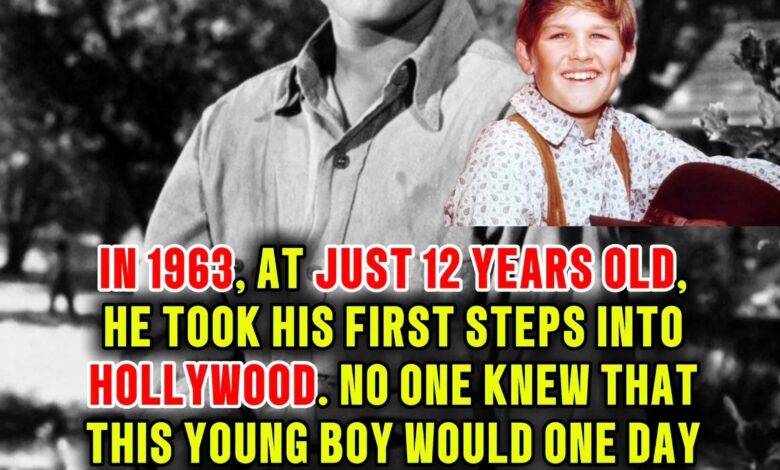
His name was Kurt Russell, and his journey into acting began when he was still a child. In 1963, at just 12 years old, he appeared in the Elvis Presley film It Happened at the World’s Fair. For a young actor, sharing a production with one of the biggest music stars in American history was an unforgettable beginning.
That same year, Russell took on the leading role in the Western television series The Travels of Jaimie McPheeters. American audiences began seeing him regularly on their screens, and his youthful appearance and natural confidence helped him stand out among the young performers of his generation.
During the 1960s, Russell became closely associated with Walt Disney Studios. He appeared in family films that entertained children and parents alike, becoming a familiar face to households across America. For viewers who grew up during that era, his early performances became part of the memories associated with Saturday afternoons and family movie nights.
At just 15, he appeared alongside Fred MacMurray in Follow Me, Boys! in 1966. His work at Disney continued for years, giving him opportunities to develop his acting skills and learn how the film industry operated. These early experiences helped prepare him for the much more demanding roles that awaited him as an adult.
Some of his most memorable early films included The Computer Wore Tennis Shoes, Now You See Him, Now You Don’t, and The Strongest Man in the World. In these stories, Russell often played an energetic young character who found himself caught up in unusual adventures. These films became especially meaningful to audiences who remembered watching them when they were young.
But there was another dream competing for his attention. Russell loved baseball, and for a time, he pursued the possibility of becoming a professional player. During the early 1970s, he played in the minor leagues, showing that his ambitions extended far beyond the movie business. Unfortunately, a shoulder injury helped bring that chapter of his life to an end, and he returned his focus to acting.
The transition from child star to respected adult actor is difficult for many performers. Some struggle to escape the image audiences formed of them when they were young. Russell, however, gradually established himself in more mature and challenging roles, proving that his talents were not limited to family entertainment.
One of the turning points in his career came in 1979, when he portrayed Elvis Presley in the television film Elvis. His performance earned him an Emmy nomination and demonstrated that he could take on a demanding dramatic role. It also brought his career full circle, connecting his early appearance in an Elvis Presley movie to a later performance portraying the legendary singer himself.
In the 1980s, Russell developed a tougher screen presence through films such as Escape from New York, The Thing, and Big Trouble in Little China. These movies revealed a different side of the actor. He could be intense, humorous, unpredictable, and convincing in roles that demanded far more than the cheerful young characters that had first made him famous.
His versatility continued into the following decade. In Backdraft, he played a dedicated firefighter, while Tombstone introduced audiences to his memorable portrayal of the legendary lawman Wyatt Earp. His performance in the 1993 Western helped cement his reputation among fans of classic American Western stories, a genre that continues to resonate with older audiences.
Away from his professional achievements, Russell’s long relationship with actress Goldie Hawn became one of Hollywood’s most enduring love stories. The two first met while working on Disney’s The One and Only, Genuine, Original Family Band in 1968, when they were both much younger. Their romantic relationship began years later, in 1983, and they built a blended family together, welcoming their son Wyatt in 1986.
Their decision to remain unmarried despite their decades-long partnership has often attracted public interest. Rather than following Hollywood’s traditional expectations, they built a life together on their own terms. Their relationship has remained a familiar part of their public story, alongside their individual careers and commitment to family.
As the years passed, Russell continued to take on roles that introduced him to new generations of moviegoers. He portrayed American Olympic hockey coach Herb Brooks in Miracle, appeared in Guardians of the Galaxy Vol. 2, and took part in other major productions. In 1998, he was named a Disney Legend, a fitting recognition of the connection between the studio and the young actor who had grown up on its screens.
Today, Kurt Russell’s story is more than a list of famous movies. It is the story of a performer who began working as a child, explored a different dream through baseball, overcame the challenge of growing beyond his early image, and built a lasting career across multiple generations. For those who remember him from his Disney years, seeing his later success can feel like watching a familiar face grow up alongside them.
And perhaps that is what makes his journey so special to longtime fans. Some remember him as the young boy in those classic family films, others remember the action hero and the fearless Western lawman, while many simply remember the years when his movies brought families together around the television.