Fans Cant Agree On This Wheel Of Fortune Answer Heres What Went Down
Conner Kemmsies, a commercial pilot, appeared on a Valentine’s Day episode of Wheel of Fortune and entered the Bonus Round with $19,080 in cash and prizes. He was playing for an additional $40,000 prize that would come down to a single puzzle.
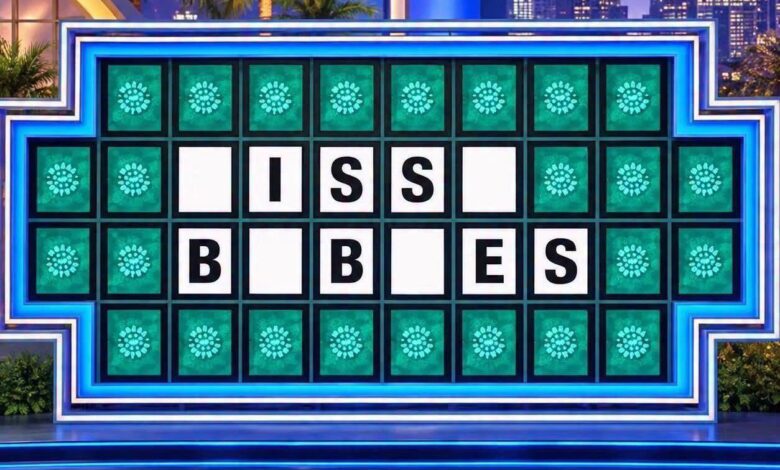
The Bonus Round board revealed the partial phrase “I DID MY,” leaving only one missing word to complete the solution. With very few letters shown and only a short countdown, Kemmsies had to rely on instinct to finish the puzzle under pressure.
After thinking through possible completions, he was unable to guess the correct answer before time ran out. The final solution was revealed as “I DID MY HOMEWORK,” a simple everyday statement that fit the category.
The main discussion among viewers was not the gameplay itself, but the category used: “Phrase.” Some argued it was too broad, since “I did my” could lead to many common completions like “job,” “best,” or “part,” making the solution harder to narrow down.
Others pointed out that in game-show terms, “Phrase” often includes familiar expressions and complete statements, not just grammatical fragments. Because of that, “I did my homework” technically fits the show’s established category rules.
The situation highlighted how difficult Bonus Rounds are, where contestants must solve quickly under pressure with limited letters. Even obvious answers can become challenging when multiple completions seem equally possible in the moment.
The $40,000 loss amplified the debate, with viewers questioning whether the category provided enough guidance. Still, official rules confirmed both the puzzle and category were valid, and Kemmsies had not solved it in time.
In the end, he left with his winnings and good humor about the miss, while the audience continued debating fairness versus difficulty. The moment remains memorable because it shows how a simple phrase can become surprisingly difficult under game-show pressure, closing the discussion on a controversial but officially correct outcome.
What made the moment so frustrating was the gap between recognizing a phrase and producing it on demand. Once the complete answer appeared, “I did my homework” looked familiar and uncomplicated. Before that reveal, however, the board offered an unfinished thought. A contestant had to choose the right ending while the clock was still running, with no chance to revisit an answer after the final seconds disappeared.
That distinction explains why viewers could disagree without disagreeing about the letters themselves. One side focused on the range of possible statements beginning with the same three words. The other focused on the fact that the completed sentence was an ordinary phrase. Both reactions came from the same puzzle, viewed from different positions: the contestant’s uncertainty in the moment and the audience’s knowledge after the solution was shown.
The money also gave the small wording dispute a much larger emotional weight. Kemmsies had already earned $19,080, so his appearance did not end without a reward. Still, the additional $40,000 depended entirely on those final seconds. A missed phrase could therefore feel much more significant than a routine wrong guess earlier in the game.
His good humor helped keep the outcome in perspective. The debate continued because the puzzle captured something familiar about competition: an answer can be valid and still be difficult to find under pressure. Knowing the solution afterward does not recreate the conditions under which a contestant had to solve it.