Fans Applaud Shakira s Response to Disrespectful Behavior
Shakira has spent decades performing under some of the brightest lights in the entertainment industry. From enormous stadium concerts to award-show stages and intimate promotional appearances, the Colombian superstar is accustomed to having thousands of eyes—and countless cameras—focused on her.
But one viral moment from September 2024 was very different.
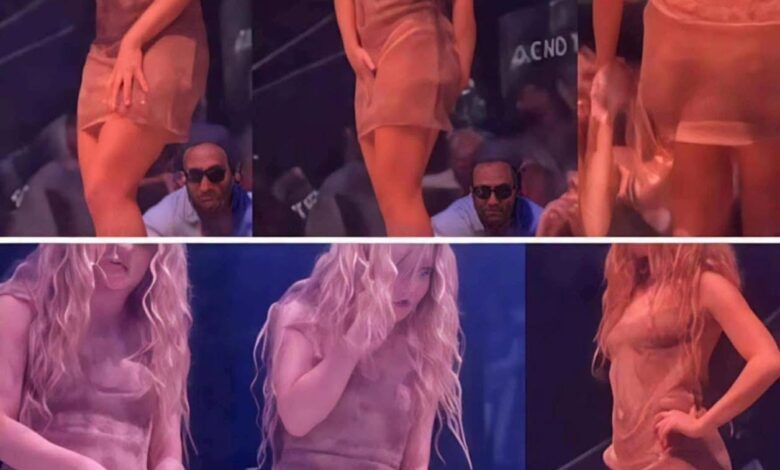
During an appearance at a Miami nightclub, Shakira suddenly appeared uncomfortable while dancing in front of the crowd. Within moments, she adjusted her clothing, gestured toward someone nearby, and eventually walked away from the stage.
Videos of the incident quickly circulated online, with reports and social media users alleging that someone in the audience had been attempting to film underneath her dress.
The short clip sparked an enormous reaction.
Instead of criticizing Shakira for interrupting the performance, many viewers applauded her decision to remove herself from a situation that appeared to make her uncomfortable. For supporters, the incident wasn’t simply another celebrity moment caught on camera. It raised a much larger question about privacy, consent, boundaries, and the behavior performers should be expected to tolerate simply because they are famous.
Shakira is known for being an exceptionally energetic performer. Dancing has always been central to her identity as an artist, and her ability to connect movement with music has become one of her signatures.
That is partly why the Miami incident attracted so much attention.
The singer was reportedly appearing at LIV nightclub in Miami while celebrating and promoting her song Soltera. Videos shared online showed her dancing on an elevated platform as people gathered closely around her.
At first, everything appeared to be part of an ordinary celebrity nightclub appearance. Shakira smiled, danced, and interacted with those around her.
Then her demeanor seemed to change.
In footage circulated on social media, Shakira could be seen looking downward toward members of the crowd. She appeared to notice something that made her uncomfortable and pulled at the bottom of her dress before continuing.
A short time later, she appeared to gesture toward the person or people in front of her, seemingly indicating that the behavior should stop.
Reports surrounding the viral clip alleged that someone had been trying to film underneath her dress. Because much of the public discussion was based on short videos and eyewitness interpretations, the precise intentions of the person involved cannot necessarily be determined from the footage alone.
What was much clearer was Shakira’s reaction.
She appeared uncomfortable, adjusted her clothing and ultimately stepped down from the platform rather than continuing to perform in the same circumstances.
That decision became the central focus of the conversation that followed.
In today’s entertainment landscape, an incident lasting only a few seconds can reach millions of people within hours.
That is exactly what happened here.
Clips from the nightclub began appearing across social platforms, where users replayed the moment and debated what they believed had occurred. The story was subsequently picked up by entertainment outlets and news organizations around the world.
For many viewers, the most important detail wasn’t that Shakira had stopped dancing. It was why she appeared to have done so.
The footage seemed to show a performer realizing that a boundary may have been crossed and immediately responding.
Fans argued that she had every right to stop.
A ticket, invitation, nightclub appearance, or celebrity status does not give members of an audience unrestricted permission to photograph someone however they want. The fact that a performer chooses to dance, wear a particular outfit, or appear in a crowded public venue does not eliminate their expectation of basic respect.
That point became one of the strongest themes in the online reaction.
The reaction from fans was overwhelmingly sympathetic.
Many people praised Shakira for refusing to remain in an environment where she appeared to feel disrespected. Rather than treating the interruption as an inconvenience, supporters framed her departure as an appropriate assertion of personal boundaries.
One idea appeared repeatedly in the discussion: fame does not cancel a person’s right to privacy.
Celebrities occupy an unusual position in modern culture. Their photographs are everywhere, their performances are recorded, and details of their lives often become public discussion. Social media has made the boundary between performer and audience even thinner.
But visibility is not the same thing as consent.
Someone agreeing to be photographed while performing does not automatically mean every angle, every moment, or every type of recording is acceptable.
This distinction seemed particularly important to the people defending Shakira.
Many argued that performers should never be expected to tolerate behavior that would be considered inappropriate if directed toward someone outside the entertainment industry.
Others noted that Shakira did not need to continue entertaining the crowd once she felt uncomfortable. Walking away was itself a legitimate response.
The discussion also revealed something broader about celebrity culture.
Fans now have extraordinary access to public figures. Smartphones can record high-quality video instantly. A private-looking moment can become global content before the person being filmed even knows the video exists.
That technological reality has changed the relationship between audiences and performers.
At a concert or nightclub appearance, hundreds or thousands of cameras may be pointed toward the stage simultaneously. Most people simply want a memory of the experience. But the ease of recording can sometimes create the false impression that anything visible is automatically fair game.
It isn’t.
There remains a difference between recording a performance and deliberately trying to capture intimate or invasive footage.
For many fans, the Shakira incident illustrated exactly why that distinction matters.
Public figures may choose careers that involve enormous visibility, but they remain entitled to boundaries concerning their bodies and personal dignity.
The same principle applies far beyond celebrities.
Whether someone is performing before thousands of people, dancing at a party, commuting to work, or simply walking down the street, clothing and location should not be interpreted as permission for invasive behavior.
Part of what made the moment resonate was how little drama Shakira appeared to create around it.
There was no need for an elaborate confrontation.
Based on the widely circulated footage, she appeared to notice something, signal her discomfort, adjust her clothing and eventually leave the immediate area.
Sometimes establishing a boundary is exactly that simple.
A person does not necessarily owe an audience an explanation before removing themselves from a situation that makes them uncomfortable.
For fans, that made the moment especially relatable.
Many people have experienced situations where they suddenly realized someone was behaving in a way that felt inappropriate. In those moments, deciding whether to confront the person, ignore the behavior, seek help, or simply leave can happen almost instinctively.
Shakira’s response reminded viewers that leaving is an option.