I Thought the White String in My Egg Was Something Dangerous The Truth Completely Surprised Me
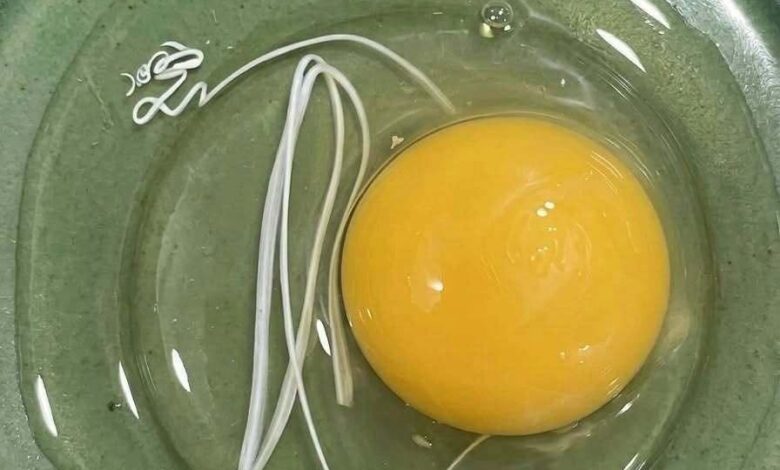
I was preparing breakfast when I cracked an egg into a clear bowl and noticed a twisted white strand beside the yolk. It looked enough like a worm that I stopped cooking. My mind jumped to parasites, contamination, recalls, and every food warning I had ever read. I was about to throw the egg away when curiosity made me look for an explanation.
The strand was a chalaza, a normal structure inside an egg. Chalazae are twisted cords of protein that help hold the yolk near the center. They act like a suspension system, connecting the yolk’s membrane with the surrounding structures so it does not move freely and rupture whenever the egg shifts.
The chalaza is not a parasite and is not evidence that the egg was fertilized. It appears in both fertilized and unfertilized eggs. It is made from egg protein and is safe to eat when the egg itself is handled and cooked safely. Removing it is optional and usually done only when a cook wants a very smooth appearance for a particular recipe.
A prominent chalaza can indicate freshness. In a newer egg, the cords are generally thicker and easier to see. As the egg ages, the structures weaken and become less visible. I had probably eaten them throughout my life without noticing because scrambling, baking, or cooking the white made the strand disappear into the rest of the egg.
Other normal features can also surprise people. A cloudy white often appears in a very fresh egg because carbon dioxide has not yet escaped through the shell. A small blood or meat spot can result from a tiny vessel rupturing during formation and is generally safe, though it can be removed if it is unappealing. A double yolk occurs when two yolks are released close together.
A gray-green ring around a hard-boiled yolk usually comes from overcooking. Iron in the yolk reacts with sulfur in the white, especially when an egg is cooked too long or cooled slowly. The color is unattractive but not normally dangerous. These ordinary variations show why appearance alone does not always indicate spoilage.
Food safety still matters. Eggs with badly cracked shells, strong unpleasant odors, unusual discoloration throughout, or signs of improper storage should not be eaten. Raw and undercooked eggs can carry bacteria even when they look normal. People at higher risk, including pregnant people, young children, older adults, and those with weakened immune systems, should follow local health guidance and consider pasteurized eggs for recipes served raw or lightly cooked.
Commercial eggs are inspected and handled under food-safety systems, but no system removes all risk. Keeping eggs refrigerated where recommended, avoiding cross-contamination, washing hands and utensils, and cooking appropriately are more useful than assuming a natural chalaza is dangerous. A normal strand and harmful bacteria are separate issues.
My reaction also reminded me how quickly food anxiety can turn an unfamiliar detail into a threat. Researching a reliable source helped me distinguish a harmless structure from a genuine warning sign. I did not need to eat food I distrusted blindly; I needed accurate information.
The next time I see a white string in an egg, I will know its name and purpose. The chalaza holds the yolk in place, is completely natural, and can be eaten. What looked like contamination was actually evidence of the egg’s design and, often, its freshness. My breakfast was never in danger from the strand. I simply noticed for the first time something that had always been there.
I kept the chalaza in the bowl and cooked the egg thoroughly. It did not change the flavor or texture in any noticeable way. That small decision felt like a useful correction to my first response. Caution around food is sensible, but caution works best when it is informed. Learning the difference between a normal feature and a sign of spoilage helped me waste less and worry more accurately.