No Evidence Barack Obama Faces Arrest for Treason and Espionage
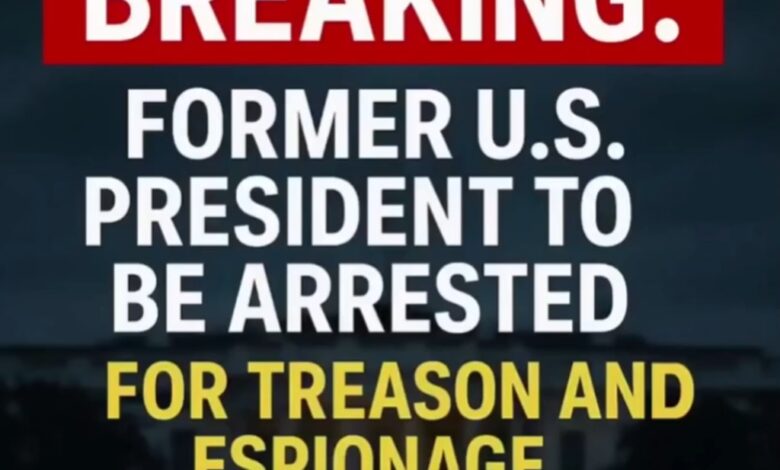
A viral article claims that former President Barack Obama is about to be arrested for treason, espionage, and seditious conspiracy. It describes secret Justice Department briefings, federal agents coordinating with the Secret Service, and a countdown measured in days. The story offers no indictment number, court filing, named prosecutor, official announcement, or on-record law-enforcement source.
Those missing elements are decisive. An arrest of a former president on charges this serious would produce verifiable legal records and immediate reporting from courts, the Justice Department, congressional leaders, and major news organizations. Anonymous “whispers” and dramatic predictions do not establish that such a process exists.
The claim appears connected to long-running accusations that the Obama administration improperly used intelligence agencies against Donald Trump’s 2016 presidential campaign. Trump and his supporters have repeatedly described the matter as spying or treason. Investigations have criticized aspects of the FBI’s surveillance process, but political accusations are not the same as criminal charges against Obama.
In May 2026, President Trump shared a social-media post calling for Obama’s arrest and accusing him of treason without presenting evidence of an impending indictment. Sharing a demand for prosecution does not mean prosecutors have filed a case. It shows that the accusation remains politically active and can be repackaged into a headline that sounds like confirmed breaking news.
Treason has a narrow constitutional meaning in the United States. It involves levying war against the country or adhering to its enemies by giving them aid and comfort, and conviction carries unusually strict evidentiary requirements. The term is often used rhetorically in political arguments, but prosecutors cannot substitute rhetoric for the elements defined in law.
Espionage and seditious-conspiracy charges likewise require specific conduct, evidence, jurisdiction, and formal legal procedure. A legitimate report would explain the alleged acts, identify the relevant statutes, and cite a filed document or authorized official. The viral story provides none of that detail. Instead, it invites readers to imagine institutional collapse if the hypothetical arrest occurred.
The source’s second page is explicitly conditional, repeatedly describing what would happen “if” an indictment materialized. That wording undercuts the certainty of the headline. Speculation about political consequences may be an opinion exercise, but it should not be presented as evidence that federal agents are preparing an arrest.
Readers should also watch for the familiar mechanics of false breaking news: urgent capitalization, unnamed insiders, claims that the media is silent, an arrest always days away, and no link to a primary document. These techniques make the absence of evidence feel like proof of a conspiracy. In reality, extraordinary legal claims require more documentation, not less.
This does not mean public officials are beyond investigation. Former presidents can face legal scrutiny, and law-enforcement decisions should be evaluated on evidence and due process. The same standard protects the public from politically motivated misinformation. Allegations should be examined, but no one should be declared charged before a charge exists.
As of the information available for this article, there is no reliable evidence that Barack Obama is scheduled to be arrested for treason or espionage. The accurate headline is therefore about an unsupported rumor, not a confirmed federal operation. Readers should wait for court records and attributable official statements before treating any claim of an imminent historic arrest as fact.
Federal criminal proceedings leave a documentary trail. An indictment, once unsealed, identifies the court, case number, charges, and defendants; prosecutors normally announce a case of enormous public importance through an official channel. Reporters can then compare those records with statements from attorneys. A post that supplies none of these elements cannot substitute dramatic language for an actual docket.
Due process matters regardless of party. It prevents a president, former president, or ordinary citizen from being treated as guilty because an opponent repeats an accusation often enough. Applying that standard is not a defense of every Obama-era decision. It is the basic distinction between examining government conduct and inventing a prosecution that has not occurred.