Why Flight Attendants Sit on Their Hands During Takeoff and Landing: The Surprising Safety Reason
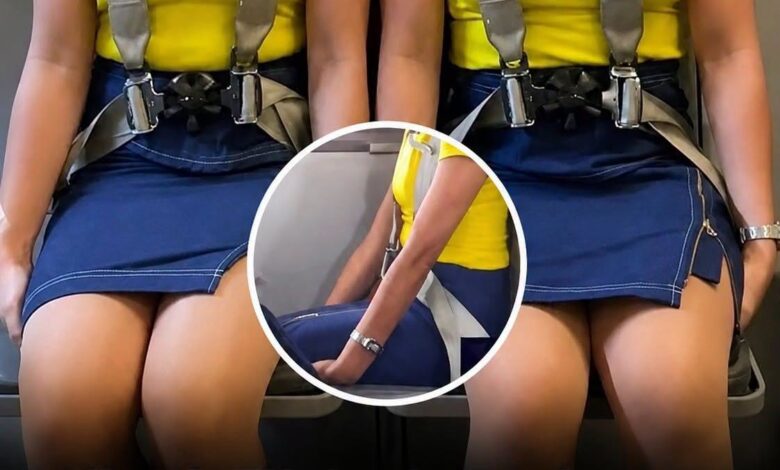
Flying often feels like an ordinary part of modern life. Passengers find their seats, store their bags, fasten their seat belts, and wait for the aircraft to leave the runway. Yet while the cabin may appear calm and routine, flight attendants are following a carefully designed set of safety procedures. One small detail regularly catches the attention of observant travelers: during takeoff and landing, cabin crew members may sit upright in their jump seats with their hands tucked beneath their thighs.
At first glance, the posture can look uncomfortable or even a little strange. Some passengers assume the crew members are simply trying to keep their hands warm or stop themselves from fidgeting. In reality, the position is part of professional safety training and is closely connected to the brace position used during the most critical stages of a flight.
Takeoff and landing are sometimes called the critical phases of flight because crews must be ready to react quickly if something unexpected happens. Although commercial aviation is extremely safe, those moments involve changes in speed, altitude, and direction. For that reason, flight attendants do not relax in the same way a passenger might. Every part of their seated posture is intentional, including the placement of their hands.
Tucking the hands under the thighs helps keep the arms controlled and close to the body. If an aircraft stops suddenly or experiences a hard impact, loose arms can move violently. That uncontrolled movement could lead to sprained fingers, broken wrists, or other injuries. A cabin crew member who hurts a hand during an emergency might struggle to open a door, operate safety equipment, release a seat belt, or help a passenger. Keeping the hands secured reduces that risk and protects the crew member’s ability to act.
The posture also encourages the body to remain stable. Flight attendants generally sit upright with their backs and heads positioned according to the design of the jump seat. Their feet are placed firmly, and their bodies are kept compact. This arrangement limits unnecessary movement and helps protect the spine, neck, arms, and legs if the aircraft experiences sudden force. The goal is not comfort. The goal is to preserve the crew member’s physical readiness during the moments when passengers may need help most.
However, the practice is not only about protecting the body. While seated in this controlled position, flight attendants are also mentally preparing. Many use a silent review sometimes described as a mental checklist. They may think through the location of exits, the commands they would need to give, the passengers who might require extra assistance, and the equipment available near their station.
At the same time, they continue watching the cabin. They check whether passengers are seated, whether seat belts remain fastened, and whether aisles and exits are clear. They may also notice unusual sounds, smells, or movements that could signal a problem. What looks like a quiet minute is actually a period of focused observation and preparation.
This readiness matters because flight attendants are not on board only to serve drinks and meals. Their primary responsibility is passenger safety. In a serious situation, they may have only seconds to assess what is happening, communicate clearly, and begin an evacuation. They must be capable of opening emergency exits, directing people away from danger, assisting injured travelers, and maintaining order in a stressful environment.
Clear leadership is especially important when passengers are frightened or confused. People do not always react predictably during an emergency. Some may freeze, while others may try to retrieve luggage or move in the wrong direction. Flight attendants are trained to use firm commands and direct passengers toward the safest available exits. Remaining physically uninjured and mentally prepared gives them the best chance of carrying out those duties effectively.
The hands-under-thighs posture is one example of how aviation safety is built from many small, deliberate actions. Passengers may never notice most of them. Cabin crews complete recurrent training, practice evacuation procedures, learn first aid, review firefighting techniques, and prepare for a wide range of unlikely scenarios. The seated brace position is simply one visible part of that larger system.
Different airlines and aircraft may use slightly different approved positions. The direction of the jump seat, the available headrest, and company procedures can affect exactly how a crew member sits. Nevertheless, the basic purpose remains consistent: minimize injury, control body movement, and stay ready to respond.
The next time you notice a flight attendant sitting with their hands tucked beneath their legs, there is no need to wonder whether it is a nervous habit. It is a practical safety measure developed through training and experience. That simple-looking position helps protect the people responsible for guiding everyone else if a normal flight suddenly becomes an emergency.
For passengers, the lesson is reassuring. Aviation safety depends on preparation long before anything goes wrong. While travelers may be thinking about their destination, the cabin crew is already considering what they would do in a crisis. Their quiet posture during takeoff and landing reflects a much larger promise: to remain alert, capable, and ready to protect every person on board.