THE FIREFIGHTER WHO DIED IN THE FLAMES AND RETURNED FROM THE DEAD: Patrick Hardison’s Unbelievable Journey Back to Humanity
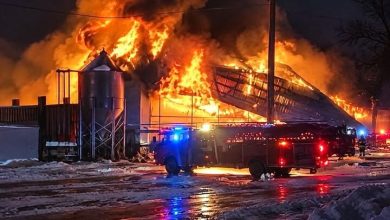
In 2001, the world as Patrick Hardison knew it ceased to exist. When the roof of a burning Mississippi home collapsed, pinning him beneath a literal hell of molten heat, he didn’t just fight for his life—he surrendered his identity to the flames. The inferno was so vicious that it didn’t just burn his skin; it erased the man underneath, incinerating his ears, his nose, his lips, and his very ability to look at his own reflection. Doctors said he wouldn’t survive, and for years, even he wondered if they were right. This is the harrowing tale of a man who literally lost his face, spent over a decade in a living nightmare, and miraculously defied death itself to reclaim his life.
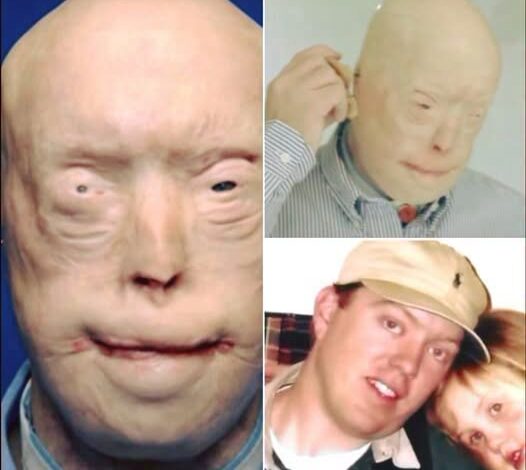
The immediate aftermath of that fateful day in Senatobia was a blur of agonizing survival. As first responders cut away his scorched gear, they were confronted with a sight so harrowing that it left them traumatized. Patrick had been reduced to a medical anomaly, a man trapped in a body that no longer resembled a human form. He was a hero, a volunteer firefighter who had answered the call of duty, only to find himself consigned to a life of profound, agonizing invisibility. For the next fourteen years, his existence was defined not by his courage, but by his condition. He survived over seventy grueling reconstructive surgeries, each one a desperate attempt to patch together a semblance of humanity, but the results left him living in the shadows.
He became a prisoner of his own appearance. His daily life was a relentless gauntlet of sunglasses and heavy hats, meant to hide the ravages of the fire from a world that was often cruel. He lost the simple, fundamental human experiences that most take for granted: he could not smile, he could not blink, and he could not laugh without enduring sharp, searing pain. The psychological toll was a silent, suffocating weight. He watched the world move on while he remained anchored to his trauma, an outcast in his own community. Children would recoil in instinctive fear at the sight of him, and adults would offer pitying, lingering stares that felt like needles against his skin. This social exile cut him off from the vibrant pulse of family life, forcing him into a lonely, self-imposed isolation that felt like a secondary tragedy.
Hope, however, proved to be more resilient than the scars he carried. In August 2015, Patrick embarked on a journey that would redefine the boundaries of modern science. He walked into NYU Langone Health to undergo the most extensive and ambitious face transplant in medical history. The procedure was a gamble with the highest possible stakes, carrying a staggering 50 percent chance of death on the operating table. For 26 hours, a dedicated team of surgeons worked to graft a new face onto his own, performing a miracle of tissue and nerve reconnection. It was a leap of faith into the unknown, a desperate bid for a second chance at a life he thought he had lost forever.
The recovery that followed was not a sprint, but a marathon of endurance. The transplant was merely the beginning; the true challenge lay in the months of torturous, repetitive therapy. Patrick had to essentially rewire his brain to control his new features. He had to learn how to swallow, how to speak clearly, and most importantly, how to blink—a reflexive action that the fire had stolen from him years ago. His survival was no longer just about healing flesh; it was about integrating a stranger’s identity into his own. He committed to a rigorous, lifelong regimen of immunosuppressive drugs, a daily reminder of the delicate, fragile nature of his new reality. He was, in every sense of the word, a bridge between two lives, tethered to the generosity of a donor he had never met.
Perhaps the most poignant moment of his recovery came when he finally met the mother of his donor, David Rodebaugh. It was a meeting of profound grief and immense gratitude, a recognition of the sacrifice that had allowed Patrick to step back into the sun. Today, Patrick Hardison exists in a reality that would have been unimaginable just a decade ago. He walks in public without drawing whispers or fearful glances. He is a father who can engage with his children without the barrier of his own physical pain. He has reclaimed his place in the world, living independently and with a renewed sense of purpose.
His story has become more than just a medical milestone; it is a testament to the unyielding power of the human spirit. He stands as a living monument to the brilliance of modern surgery, but more importantly, he is a survivor who refuses to be defined by the fire that tried to consume him. In the face of unimaginable loss, Patrick Hardison chose to keep fighting until the world finally gave him back his face. He is no longer the man hiding behind a mask of trauma; he is a man who walked through the inferno and emerged on the other side,