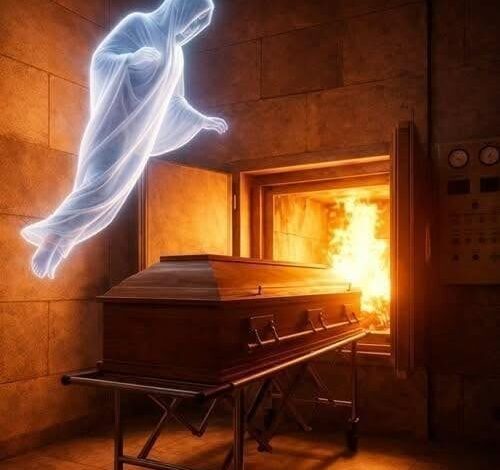
The Forbidden Ritual: Is Cremation Actually a Sin in the Eyes of God?
Is your final choice for your earthly remains a path to eternal damnation? For centuries, the faithful have stood by the sacred tradition of burial, viewing the body as a hallowed vessel that must be laid to rest in the earth. But as cremation surges in popularity, whispers of a “sinful” practice have ignited a firestorm of theological debate. Does burning the body defy the promise of resurrection, or are we clinging to an outdated ritual that has no place in the modern soul’s journey? The stakes are nothing less than your spiritual future. It is time to uncover the truth behind the ashes.
In recent decades, cremation has transformed from a rare outlier into the preferred choice for millions across Western society. The shift is often attributed to the cold, hard realities of the modern world: skyrocketing funeral costs, the diminishing availability of cemetery plots, and an increasing desire for environmental responsibility. Yet, while families embrace cremation as a respectful and practical solution, a lingering shadow of doubt persists within the Christian community. For those deeply rooted in biblical tradition, the act of cremation raises profound questions about the sanctity of the body, the nature of faith, and the literal promise of the afterlife.
The central tension in this debate stems from a perceived conflict between tradition and theology. Burial is undeniably woven into the very fabric of biblical history. From the patriarchs like Abraham and Moses to the monumental narrative of the New Testament, interment in the earth has served as the definitive model for honoring the dead. It is a tradition that speaks to a specific worldview—one that views the human body not merely as a shell, but as a sacred temple destined for a future, miraculous restoration. The burial of Jesus Christ stands as the ultimate paradigm for this belief; his entombment has served as the bedrock of Christian hope for two millennia, symbolizing the sowing of a seed that will one day rise again in glory. St. Paul’s letters reinforced this imagery, linking the act of burial directly to the concept of resurrection. For generations, this served as the cornerstone of why burial was not just a preference, but the theological standard.
However, a rigorous examination of the Scriptures reveals a striking absence of any direct, explicit prohibition against cremation. Throughout the Bible, cases involving the burning of bodies were generally the result of extreme, situational circumstances—such as the aftermath of war or the necessity of public health—rather than moral instruction or divine commandment. Modern theologians are increasingly arguing that while burial remains a beautiful and time-honored tradition, the choice to cremate falls firmly under the umbrella of Christian liberty rather than a violation of doctrinal requirement.
The fear surrounding cremation often stems from a misunderstanding of the body as the “temple of the Holy Spirit.” Critics of the practice often express a visceral worry that reducing the body to ash is an act of profound disrespect or a tangible display of a lack of faith in the power of resurrection. They argue that burial acknowledges the body’s future glory, whereas cremation may appear to dismiss the physical form as disposable. In response, scholars offer a powerful theological counterpoint: the omnipotence of God is not constrained by the physical state of human remains. Whether a body is interred, cremated, or scattered to the wind, the divine power required to raise the dead remains absolute. A life defined by faith is not undone by the method of its departure.
To understand why this friction exists, one must look at history. In the ancient world, cremation was frequently associated with pagan practices that explicitly denied the reality of resurrection. In that context, the Christian insistence on burial was a deliberate, counter-cultural statement of belief in the life to come. Today, however, the cultural landscape has shifted entirely. Cremation is almost universally motivated by the practicalities of modern life—finances, space, and family logistics—rather than any form of doctrinal rebellion or theological statement. The intention behind the act is, in the vast majority of cases, rooted in love and necessity, not in a desire to challenge the foundations of the faith.
Most modern Christian denominations have reached a consensus: the method of disposal for our earthly remains has no bearing on salvation or the promise of resurrection. The core of the faith is not the preservation of the physical form, but the hope of a transformed, glorified body in the presence of the Creator. The focus of the afterlife is on the eternal promise of life beyond death, where the limitations of the physical world no longer apply.
Ultimately, whether a family chooses the finality of a grave or the quiet gathering of an urn, the theological focus remains firmly fixed on the resurrection of Jesus Christ. The body’s final resting place is a secondary detail in the grand tapestry of eternity. Neither fire, nor decay, nor time can diminish the hope found in Him. The choice is a personal one, reflective of the circumstances and convictions of the living, and it does not alter the eternal destiny of the soul. Faith, at its heart, is about the journey of the spirit, and that is a path that transcends the dust and the flame.