The Silent Killer: Five Subtle Body Warnings That Could Save Your Life from a Stroke
You might be the picture of health—eating clean, hitting the gym, and powering through your high-pressure career with ease—but inside your brain, a ticking time bomb could be ready to detonate. We are taught that strokes are an “old person’s problem,” a terrifying risk that only arrives after retirement, but the data is screaming a different story. Young, active adults are being struck down in their prime at an alarming rate, and most of them never saw it coming. Are you ignoring the subtle, life-altering red flags your body is desperately trying to send you before it’s too late?
The modern perception of a stroke is fundamentally broken. We visualize elderly individuals struggling with chronic health conditions, which creates a dangerous sense of complacency in those under the age of forty-five. However, the American Heart Association has reported a staggering 40 percent increase in stroke occurrences among young adults in recent years. Today, approximately 10 to 15 percent of all stroke victims are between the ages of 18 and 45. This shift is driven by a complex web of modern lifestyle factors: high-stress environments, the rising prevalence of hypertension and diabetes, the use of oral contraceptives containing estrogen, and the increased use of recreational substances.
The medical community emphasizes that the success of stroke intervention is entirely dependent on timing. Dr. Khurram Nasir, a leading expert in cardiovascular prevention at Houston Methodist, highlights the tragic reality that modern medicine’s ability to reduce disability is completely neutralized if the patient fails to identify the symptoms in those first critical minutes. A stroke is essentially a blockage or disruption of blood flow to the brain, and every second that passes without intervention results in the loss of millions of neurons. This isn’t just a health setback; it is the leading cause of global disability and a potential sentence of irreversible brain damage or death.
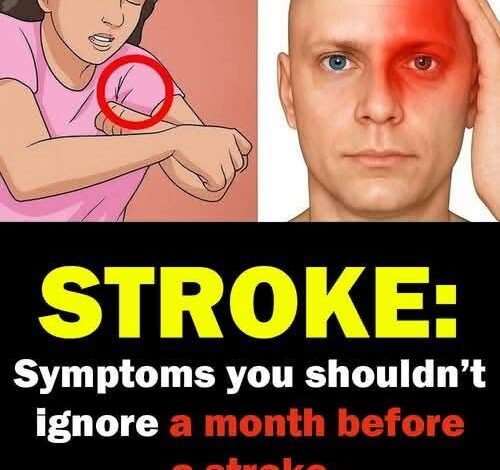
The first, and most pervasive, sign is sudden weakness or numbness, typically isolated to one side of the body. You might notice a subtle drooping in your face, an arm that feels like lead, or a leg that simply refuses to cooperate when you try to stand. It arrives without fanfare or warning. In younger people, this symptom is frequently discarded as “just fatigue,” a lingering nerve issue from a workout, or simple high-stress burnout. However, even if that numbness seems to fade away, it could be a transient ischemic attack, or “mini-stroke.” If one side of your body feels out of sync, do not wait to see if it improves. It is an emergency.
Equally deceptive is the sudden onset of speech or cognitive difficulties. A stroke can target the language centers of the brain, leading to slurred words, nonsensical sentence structures, or an inability to comprehend what is being said to you. You may know exactly what you want to communicate, but your brain effectively loses the connection to your vocal cords. This symptom is often tragically mislabeled as a panic attack, intoxication, or sheer exhaustion. But make no mistake: when your brain’s communication center is compromised, it is a clear indicator that oxygen levels in the brain have plummeted.
Perhaps the most commonly dismissed warning sign is a severe, sudden-onset headache. We have all experienced headaches from dehydration, screens, or stress, but a stroke-related headache—often associated with hemorrhagic strokes involving bleeding in the brain—is distinct. It is frequently described by survivors as the “worst headache of your life.” Unlike a typical migraine that might build slowly, this arrives as an abrupt, intense explosion of pain, often accompanied by nausea, vomiting, or a dizzying alteration in consciousness. If you find yourself in the grip of a headache that feels “wrong” or uncharacteristically severe, do not try to “sleep it off.”
Balance and coordination are also frequently sacrificed during the early stages of a stroke. If you suddenly experience the room spinning around you, or if walking in a straight line becomes an impossible task, your cerebellum may be under attack. While many young people brush off dizzy spells as vertigo or low blood sugar, sudden, severe coordination failure is a red flag that the brain is struggling to process movement. It is often accompanied by other subtle symptoms, but even on its own, it demands immediate professional assessment.
Finally, vision problems are a vital, yet frequently overlooked, indicator. You might experience blurred vision, sudden darkness in one eye, or a mysterious loss of part of your visual field. Many assume this is just eye strain from spending too many hours staring at computers or smartphones, but vision changes triggered by a stroke do not develop gradually over a long day. They arrive suddenly and unexpectedly. If your vision is shifting and you are also feeling off-balance or suffering from a headache, you are experiencing a medical event that requires emergency intervention to prevent permanent damage.
The consensus is clear: our general perception of who is “at risk” for a stroke is dangerously outdated. You cannot afford to wait for a textbook list of symptoms or to assume that your age provides some form of immunity. The reality is that blood flow to the brain is a delicate system, and even minor, seemingly random symptoms can be the difference between a full recovery and a life defined by permanent disability.
Your body is an incredibly communicative machine, and it does not scream until it has tried to whisper. Listen to those whispers—the slight numbness, the momentary confusion, the headache that came out of nowhere. Acting quickly, even if you suspect it might be “nothing,” is the most courageous and life-saving decision you can make. Medical intervention for strokes is intensely time-sensitive; there is no prize for waiting to see if it gets worse. Be aware, be vigilant, and never, ever ignore the signals that your brain is struggling to function. It is a choice that could literally save your life.