What the “M” on Your Palm Is Said to Mean
Look closely at your palm and you may notice more than random lines crossing your hand. For centuries, people have treated those lines as symbols, using palmistry to think about personality, choices, and the way a person moves through life.
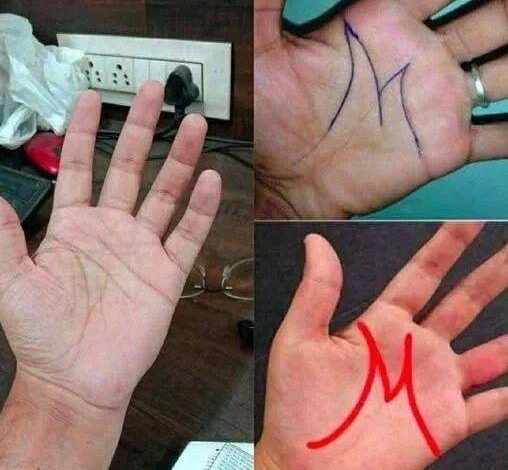
One marking that often gets attention is the appearance of an “M” shape across the center of the palm. It is not something everyone sees clearly, and it is not considered proof of anything scientific. Still, in traditional palm-reading circles, the shape has become one of the more talked-about patterns.
How the “M” Shape Is Usually Formed
In palmistry, the “M” is typically described as a pattern created when several major lines appear to connect in a certain way. These may include the life line, head line, heart line, and fate line.
Because everyone’s hands are different, the marking can look sharper on some palms and much less obvious on others. Some people may see a clear letter-like shape, while others may only notice a loose pattern if they are specifically looking for it.
What Traditional Palmistry Associates With It
Traditional interpretations often connect the “M” marking with intuition, awareness, and honesty. Palmistry enthusiasts sometimes say that people with this pattern are good at reading situations, noticing details, or sensing when something does not feel right.
The shape is also sometimes linked with a balance between thinking and feeling. Since it is said to involve major palm lines associated with emotion, decision-making, and direction, some readers view it as a symbol of inner focus and personal purpose.
These meanings can vary depending on the tradition or the individual palm reader. In most modern discussions, the “M” is treated less like a prediction and more like a symbolic way to talk about character traits such as determination, emotional intelligence, and resilience.
What Readers Should Know
Palmistry is a cultural and symbolic practice, not a scientific method for determining a person’s future. A line on the hand cannot prove someone’s personality, predict success, or decide their path in life.
That said, many people enjoy palm reading as a form of self-reflection. Looking at a symbol like the “M” can lead to useful questions: Do you trust your instincts? Are you balancing logic with emotion? Are you paying attention to the patterns in your own decisions?
Whether you see the marking as meaningful or simply as an interesting feature of the hand, its lasting appeal comes from the same place as many old traditions: it gives people a reason to pause, reflect, and wonder what their own story might say.