My Sister Encouraged Her Kids To Break My Brand New Flat Screen Then Refused To Pay A Cent But Karma Found Her Three Days Later
Growing up, my sister Brittany was the undisputed star of every room she entered. She was louder, bolder, and possessed a magnetic pull that always seemed to drag the spotlight toward her, no matter who else was standing in it. If I brought home an A, she had won a trophy; if I received a compliment, she had a story that rendered mine insignificant. I spent my childhood as the peacekeeper, the silent observer who learned that swallowing my feelings was the only way to keep the atmosphere from turning toxic. By the time I reached thirty-five, married to Sam and raising our spirited five-year-old daughter Mia, I thought I had finally escaped that shadow. We weren’t wealthy, but we were disciplined, saving every spare dollar to turn our modest house into a home.
Just last month, after a year of strict budgeting and cutting out every non-essential luxury, we finally finished our living room. The centerpiece was a beautiful flat-screen TV—the first major purchase we had ever made simply because we wanted it, not because something else had broken. It was a symbol of our hard work. When Brittany first saw it, her response was a signature mix of condescension and passive-aggression, masked as a joke. She smirked and made a comment about us “keeping up with the soaps,” a jab intended to deflate my pride just enough to keep me in my place. I let it slide, as I always did, never suspecting that her envy would soon take a far more destructive form.
The following Thursday, Brittany called with her “sugary sweet” voice—the one she reserved for favors that inevitably led to chaos. She asked me to watch her two sons, Jayden and Noah, for a few hours. Despite knowing that her boys were essentially a localized weather system of destruction, I agreed, wanting to be a good aunt and hoping Mia would enjoy the company. Brittany laughed off my concerns about them being rowdy, calling me “uptight” and insisting that “boys will be boys.”
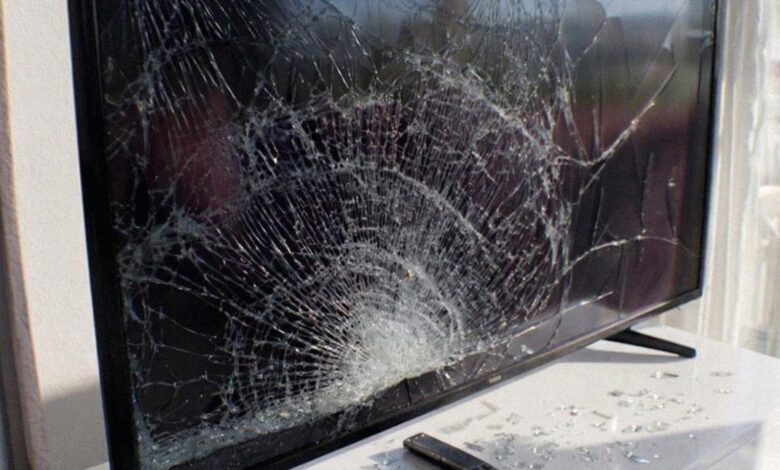
The afternoon began with deceptive calm, but the peace was shattered by a sound that every homeowner recognizes in their nightmares: a heavy, glass-shattering crash. I ran into the living room to find our brand-new TV face-down on the floor, its panel spider-webbed like a windshield in a wreck. A trail of orange juice was soaking into the rug, and a soccer ball rolled mockingly toward the couch. Mia was in tears, explaining through her sobs that she had told her cousins not to throw the ball, but they had insisted their mother always allowed it. I was paralyzed by a cold, white-hot fury, but I maintained my composure for the sake of the children, cleaning up the mess and covering the “body” of our luxury with a towel.
When Sam returned home, his silence was louder than any shout. We called a repair technician, only to be told that the panel was toast; replacing it would cost more than a new unit. When Brittany arrived to pick up her sons, I calmly asked her to help us cover the cost of a replacement. Her reaction was a masterclass in gaslighting. She laughed in my face, telling me that I was the adult in the room and that if the TV broke, it was my fault for not supervising them closely enough. She called me dramatic, insisted we clearly weren’t broke if we could afford renovations, and walked out without so much as an apology.
That night, I didn’t just cry for the lost money; I cried for the lifetime of disrespect I had allowed her to heap upon me. Sam stayed by my side, promising we would save again, but the wound was deeper than a broken screen. It was the realization that my sister saw my sacrifices as nothing and my hospitality as a liability. However, the true depth of her betrayal didn’t surface until a few days later when I called my nephew, Jayden, to check in on him. Jayden, still possessing a conscience his mother had long since discarded, admitted the truth through a quiet, hesitant voice. He told me that Brittany had specifically told them it was okay to play with the ball inside my house because the room was “big and nothing would break.”
She hadn’t just been negligent; she had been the architect of the destruction. She had practically handed them the ball and pointed it at my pride. I wanted to call her and scream, to demand justice for the lie she had told to my face, but Sam encouraged me to let it go. He told me that karma was far more efficient at settling debts than I ever could be. He was right.
Three days later, my phone vibrated with a call from Brittany. Her voice wasn’t sugary this time; it was a jagged edge of panic and rage. She screamed that her boys had “destroyed everything.” Emboldened by the permission she had given them at my house, they had taken the soccer ball to her own living room. They had shattered her new TV, drenched her laptop in juice, and demolished a shelf of expensive perfumes. She tried to blame me, claiming that because I “didn’t stop them” at my house, they now thought it was acceptable to wreck things.
I leaned back against my kitchen counter, feeling a strange, weightless sense of calm. I told her exactly what Jayden had told me—that she was the one who gave them permission to treat a living room like a playground. I reminded her that children don’t understand the nuance of whose house they are in; they only remember what they are allowed to do. The silence on the other end of the line was the most satisfying thing I had heard in years. She had no excuses left, no way to twist the narrative, and no one to point the finger at but the woman in the mirror.
She hung up, but a few hours later, a text arrived. It was three sentences: “You were right. I should’ve listened. I’m sorry.” For Brittany, this was the equivalent of a public confession. I didn’t need to gloat. I simply replied that I hoped we had both learned something and sent a heart emoji, closing the chapter on her drama.
We still have a bare spot on our wall where the TV used to be. Every time I walk past it, I don’t feel the sting of the loss or the burn of her insult. Instead, I feel lighter. That empty space represents the boundary I finally set, a line in the sand that Brittany finally tripped over. The TV was just glass and plastic, but the peace of mind I gained from watching karma take the wheel was worth every cent of the replacement cost. My sister finally learned that when you throw stones—or soccer balls—at someone else’s joy, you shouldn’t be surprised when the glass in your own house starts to shatter.