The Hidden Truth Behind Cremation and The Bible That Most Believers Never Knew
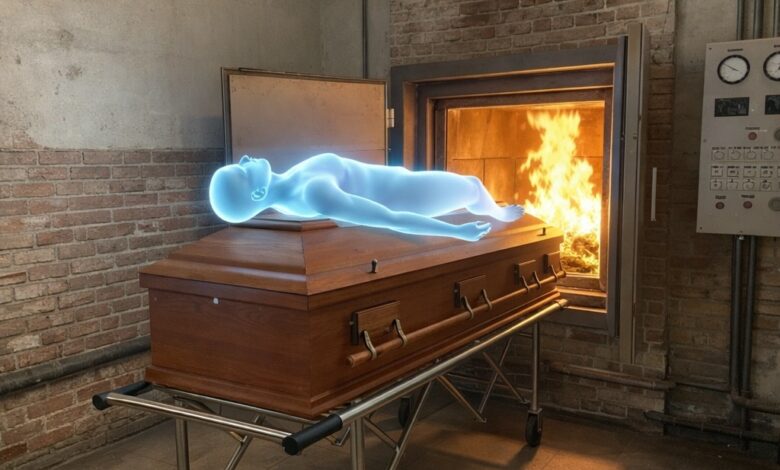
The roar of the furnace and the transformation of a physical vessel into a handful of ash has become a standard sight in the modern landscape of mortality. In recent decades, the Western world has pivoted sharply away from the rolling green hills of traditional cemeteries toward the efficiency of the crematorium. Driven by the skyrocketing costs of funeral plots, the shrinking availability of land in urban centers, and a growing consciousness regarding the environmental footprint of embalming chemicals, families are increasingly choosing the flame. Yet, as the plumes of smoke rise, so do the voices of the faithful. For many, a haunting question remains etched in the back of the mind, whispering through the pews and over the dinner table: Is cremation a sin in the eyes of the Almighty?
To understand the tension surrounding this topic, one must delve into the deep, foundational layers of Judeo-Christian history. For millennia, the act of burial was not merely a logistical necessity but a profound theological statement. In the ancient Near East, the way a person was laid to rest spoke volumes about their view of the afterlife and their respect for the Creator. Throughout the Old Testament, the patriarchs treated the remains of the deceased with a reverence that bordered on the sacred. Abraham went to great lengths to purchase a cave in Hebron to bury Sarah, a site that would eventually house his own remains and those of his descendants. Moses was buried by the hand of God Himself in a valley in Moab.
This cultural preference for burial was cemented in the New Testament by the most significant event in Christian history: the death and resurrection of Jesus Christ. When the Savior died, He was wrapped in linen and placed in a stone tomb. For the early church, burial was an act of imitation. To bury a loved one was to follow the pattern set by the Lord, signifying a “sowing” of the body into the earth like a seed, with the expectation that it would one day sprout into a glorified, resurrected form. This symbolism is where the discomfort with cremation truly takes root. If the body is a “temple of the Holy Spirit,” as the Apostle Paul famously wrote, does reducing that temple to ash constitute an act of desecration?
For centuries, the church’s stance was clear and often rigid. In the eyes of many early theologians, cremation was associated with pagan rituals and the denial of the resurrection. Some ancient persecutors of the church burned the bodies of martyrs specifically to mock the Christian hope, believing that if the body were destroyed, God could not bring it back to life. In response, the church doubled down on burial as a testimony of faith—a physical declaration that death is merely a sleep and the body is waiting for the trumpet to sound. This historical baggage is why, even today, some denominations and traditionalists view the practice with a sense of unease, feeling that it strips the transition from life to death of its inherent dignity and biblical symbolism.
However, a closer, more objective examination of the Holy Scriptures reveals a surprising reality: the Bible does not explicitly forbid cremation. There is no “Thou shalt not burn the dead” found in the tablets of stone or the letters to the early churches. While burial is undoubtedly the consistent biblical custom, it is presented as a cultural norm rather than a divine mandate. The few instances where burning is mentioned in a negative light usually involve judgment or the desecration of an enemy, but these do not serve as a universal prohibition for the faithful.
Modern theologians and scholars have begun to approach the subject with a balance of empathy and logic. They argue that the focus of the Gospel is the redemption of the soul and the ultimate power of God over all matter. If the resurrection depended on the preservation of physical remains, the martyrs who were burned at the stake, the sailors lost at sea, and those whose bodies were vaporized in catastrophic events would be without hope. This, of course, contradicts the foundational belief in an omnipotent Creator. If God can speak the entire universe into existence out of nothingness, He is certainly capable of reconstituting a glorified body from scattered molecules or mountain-top ashes. The “how” of the resurrection is a divine mystery that transcends the physical state of the remains.
This shift in perspective has allowed many families to navigate the practicalities of the 21st century without the crushing weight of spiritual guilt. They see cremation not as a rejection of the body, but as an acceleration of the natural process of “dust to dust.” Whether a body decomposes slowly over decades in a casket or rapidly through the heat of a crematorium, the biological conclusion is the same. The essence of the person—their spirit, their legacy, and their identity in Christ—is not housed in the calcium of the bone or the carbon of the ash. It is held in the memory of God.
Furthermore, proponents of cremation argue that it can be handled with just as much sanctity as a traditional burial. A memorial service focused on the Word of God, a respectful handling of the remains, and a meaningful placement of the urn can all honor the deceased in a way that aligns with Christian values. In many cases, the financial freedom provided by choosing a less expensive option allows a family to use their resources to honor their loved one’s legacy through charity or support for the living, which many argue is a more vibrant testimony of faith than an elaborate, gold-plated casket.
Ultimately, the debate over cremation reveals a deeper truth about the nature of faith. It highlights the tension between tradition and grace, between the symbols we use to process our grief and the eternal realities they represent. While the Bible provides a beautiful tradition of burial that reflects the hope of the resurrection, it also offers a grace that covers the logistical choices of a changing world. For the believer, the resting place of the body is a temporary detail in a much grander story.
The Christian hope is not anchored in the preservation of the physical “tent” we inhabit on earth, but in the promise of a new, eternal dwelling. Whether one lies beneath a headstone in a quiet churchyard or is scattered across a favorite coastline, the promise remains unchanged. Death has been swallowed up in victory. As families face these difficult decisions, they can find peace in the fact that God’s love is not limited by fire or earth. The focus remains on the life that was lived and the eternal life that is to come—a hope that transcends both the tomb and the urn, looking forward to the day when all things will be made new.