First American Pope Snubs White House as Vatican Feud Reaches Breaking Point
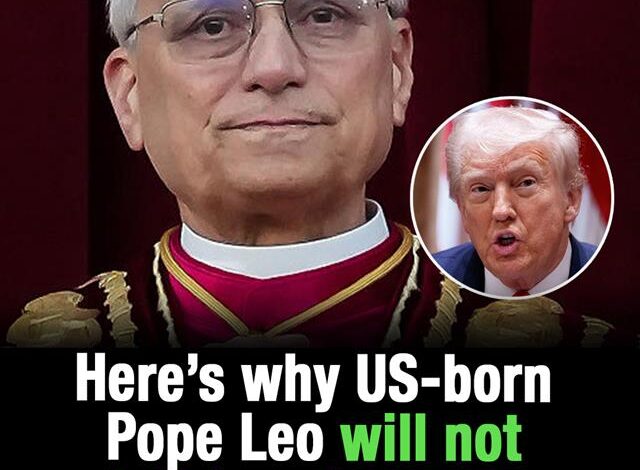
The world is watching in stunned silence as the first American born pontiff, Pope Leo XIV, appears to be drawing a definitive line in the sand against the current administration. While many expected the election of a U.S. born Pope to herald a new era of unprecedented cooperation between the Vatican and Washington, the reality has proven to be a masterclass in diplomatic frostiness. The expected homecoming tour of the United States has been conspicuously absent from the Holy See’s itinerary, sparking a firestorm of speculation about the deep ideological chasm separating the altar from the Oval Office.
Behind the carefully curated handshakes and the boilerplate diplomatic language of respect and dialogue, a cold drama is unfolding that pits two of the world’s most powerful figures against each other. This is not merely a disagreement over policy; it is a fundamental clash of worldviews. On one side stands a President whose rhetoric is built on the foundations of national security, hardened borders, and the projection of military strength. On the other stands a Pope who has made it his mission to center the global conversation on the plight of the marginalized, the suffering of migrants, and a radical commitment to non violence in a volatile Middle East.
The symbolic weight of Pope Leo’s travel choices cannot be overstated. By prioritizing visits to migrant camps and conflict zones over high profile celebrations in American cities, he is sending a message that resonates far louder than any formal press release. The Vatican is signaling that the moral weight of a papacy is measured by its proximity to human suffering, not its alignment with geopolitical power. Each homily focused on mercy and every appeal for restraint in international conflict serves as a subtle, pointed contrast to the hard edged, America First posture maintained by the White House. This silent protest has effectively stalled any plans for a papal visit to American soil, as the Holy See avoids the optics of a joint appearance that would inevitably be interpreted as an endorsement of the President’s controversial border policies.
Diplomatic insiders report that while the Pentagon has made rare outreaches to the Vatican’s envoy in hopes of smoothing over relations, the gap only continues to widen. The tension is palpable in the way both sides manage their shared stage. They are engaged in a careful, high stakes choreography where both want to avoid an explosive public feud, yet neither is willing to bridge the gap. It is a standoff between moral authority and political might, where the tension itself has become the defining story of the year.
The decision to avoid the United States is seen by media analysts as a strategic move to preserve the independence of the papacy. For Pope Leo XIV, returning to his home country while it is governed by a leader whose policies he views as morally questionable would create a PR nightmare and a theological contradiction. By staying away, he maintains his status as a global moral arbiter rather than a domestic political pawn.
As the 2026 calendar continues without a confirmed date for a U.S. visit, the world is left to interpret the silence. This standoff serves as a stark reminder that even when a leader shares a nationality with a high profile official, they rarely share the same script. For now, the first American Pope remains a stranger to his own land, choosing the periphery of the world over the corridors of power in Washington. The homecoming that millions hoped for remains a casualty of an invisible war of ideals that shows no signs of thawing.