I Became a Dad at 18 After My Mom Abandoned My Twin Sisters — 7 Years Later, She Returned with a Shocking Demand – Wake Up Your Mind
I am 25 years old now, and when people hear that I became a parent at eighteen, they usually assume I mean an accidental pregnancy, a rushed wedding, or some reckless mistake that changed my life overnight. The truth is stranger, heavier, and far more complicated than that. I never planned to raise children at all, let alone two newborns who were not technically mine. But life has a way of deciding things for you, whether you are ready or not.
Back then, I was a high school senior living in a cramped, rundown two-bedroom apartment with my mother, Denise. She had always been unpredictable, one of those people who could be affectionate and charming one day, then distant and resentful the next. Growing up with her felt like living under constantly shifting weather. I learned early to read her moods, to sense when a storm was coming, and to make myself small.
Some days, she would cook dinner and hum to herself, asking about my classes and pretending we were a normal family. Other days, she would sit on the couch with a drink in her hand, staring at the wall as if the world had personally betrayed her. On those days, she snapped at me for breathing too loudly. I learned not to ask for much.
When she came home one evening and told me she was pregnant, I was stunned. She did not look excited or scared, only angry. I remember thinking, foolishly, that maybe this would anchor her. Maybe having a baby would give her purpose, something solid to hold onto.
I was wrong.
The pregnancy only seemed to fuel her resentment. She was furious at the man who had disappeared the moment she told him. She was furious at her body and furious at the world for not showering her with the attention she believed she deserved. I asked who the father was exactly twice. The second time, she screamed at me to mind my own business, and I never brought it up again.
I still remember the sound of the refrigerator door slamming late one night while she muttered that men always vanished and left women to clean up the mess. I was seventeen, standing in the hallway, realizing that whatever was coming next, I would be part of it whether I wanted to be or not.
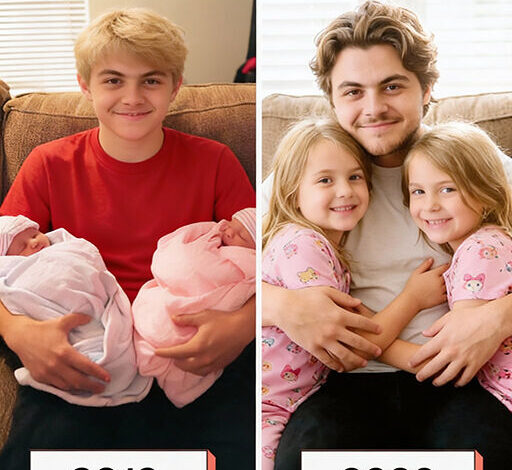
When the twins were born, two tiny girls with dark hair and wrinkled faces, I was there in the hospital room. Denise named them Lila and Rowan. For the first two weeks, she played the role of mother in fits and starts. She would change a diaper and then disappear into the bedroom for hours. She would warm a bottle, feed one baby halfway, then fall asleep on the couch while the other cried herself hoarse.
I tried to help where I could, though I had no idea what I was doing. I was still a kid myself, juggling homework between night feedings, searching online for how to soothe a newborn while silently panicking that I was doing everything wrong. I wondered if this exhaustion and confusion were normal, or if our situation was already falling apart.
Then, one night, it did.
I woke up at three in the morning to crying, sharp, desperate screams that cut straight through my sleep. I stumbled into the living room, half-awake, expecting to find Denise slumped on the couch. Instead, the apartment was silent except for the babies. Her coat was gone. Her shoes were missing. There was no note on the counter and no message on my phone.
She had vanished.
I stood in the kitchen holding Rowan while Lila screamed from her bassinet, and a cold realization settled into my chest with terrifying clarity. If I failed them, there was no one else. No backup plan, and no adult was stepping in. If I did not take care of them, no one would.
It sounds dramatic now, but in that moment, it felt brutally true.
There was no decision to be made, really. I did not sit down and weigh my options. I did not debate whether I was ready. I simply stayed. The dream I had carried since childhood, going into a pre-med program and becoming a surgeon someday, quietly slipped off my desk along with the college brochures I never opened again.
I worked wherever I could. Overnight shifts at a warehouse. Food delivery during the day. Weekends, whenever someone needed coverage. I learned how to stretch a thirty-dollar grocery run into a week of meals. I learned which thrift stores had the best baby clothes and which assistance programs asked the fewest questions.
I gave up my teenage years without ceremony. No parties. No carefree nights. No chance to be reckless. I learned how to warm bottles at three in the morning with shaking hands, how to rock one baby while bouncing the other on my hip, and how to function on exhaustion so deep it felt like part of my bones.
People told me to let the system handle it. They told me to call social services, to give them up for adoption, and to think about my own future. But every time someone suggested it, I imagined Lila and Rowan growing up in a stranger’s house, wondering why no one fought for them. I could not do it.
They started calling me “Bee” before they ever used the word “brother.” It was a toddler’s attempt at my name, and it stuck. Soon, everyone, from neighbors to preschool teachers, called me that too. I stopped correcting them.
At the grocery store, I would carry them both, one on each hip, while people whispered behind me. Some looked judgmental. Others looked pitying, like I was a cautionary tale. None of it mattered when the girls curled up against me during movie nights or handed me crayon drawings labeled “me, Lila, Rowan, and home,” as if we were the luckiest family in the world.
When they fell asleep on my chest, I made myself a promise. They would never feel abandoned, no matter what it cost me.
For a while, I thought we had survived the worst of it. Life was hard, but it was stable. And then, seven years later, Denise came back.
It was a Thursday afternoon. We had just returned from school when there was a knock on the door. I opened it without thinking and did not recognize the woman standing there.
She looked polished. She wore an expensive coat, flawless makeup, and jewelry that caught the light. She smelled like department store perfume, not the stale cigarettes and desperation I remembered. For a second, my brain refused to connect her to my mother.
Then she said my name, hesitant, like she was testing it out.
Everything inside me dropped.
When she heard the girls’ voices from down the hall, her entire demeanor shifted. She smiled, crouched down, and pulled glossy shopping bags from a luxury store I had only ever seen online. Inside were things I could never afford: a tablet, a delicate necklace, and a stuffed toy Rowan had once pointed at on television months earlier.
The girls stared at her, confused and hopeful all at once. Children want to believe in their parents, even when they have every reason not to.
Denise came back again a few days later. Then again. Always with gifts, exaggerated affection, and stories about her “new life.” She took the girls for ice cream, laughed too hard at their jokes, and asked about school as if she had not missed years of it.
I tried to believe she wanted to reconnect. But every time she left, my stomach twisted with unease.
The truth arrived in a thick white envelope with gold trim.
It was a letter from a lawyer, filled with cold phrases like “petition for legal guardianship” and “best interests of the minors.” Denise was not here to make amends. She wanted custody.
When I confronted her, she barely reacted. She said it was time she did what was “best for them,” and that I had “done enough.” She talked about opportunities, connections, and the kind of life she could offer.
Then she said the words that broke something inside me.
“I need them.”
Not “I love them.” Not “I missed them.” Just that.
When the girls walked in and overheard enough to understand, everything fell apart. They cried. They confronted her. They clung to me like they were afraid the ground might disappear beneath their feet. When Rowan whispered that I was their real parent, Denise’s expression hardened, not with heartbreak, but with irritation.
She left with a threat and a slammed door.
That night, after the girls finally fell asleep, I decided I was not going to back down.
I got a lawyer. I gathered evidence. Medical records. School forms. Witness statements. I filed for full legal guardianship and retroactive child support. The courtroom was brutal. Her attorneys painted me as unstable and manipulative. I stayed calm and told the truth.
When the judge asked the girls what they wanted, they chose me without hesitation.
The ruling was clear. Custody stayed with me. Denise was ordered to pay monthly child support.
After that, something inside me finally loosened. I slept. I laughed again. And late at night, when the apartment was quiet, an old dream stirred back to life.
Now, I work part-time and take night classes. I am still tired, still learning, and still building. But I am no longer afraid.
I did not plan this life. But I showed up for it. And that made all the difference.